

willedoo
-
Posts
1,233 -
Joined
-
Last visited
-
Days Won
2
Content Type
Profiles
Forums
Gallery
Downloads
Blogs
Events
Store
Aircraft
Resources
Tutorials
Articles
Classifieds
Movies
Books
Community Map
Quizzes
Videos Directory
Posts posted by willedoo
-
-
I guess going by that, the engine must have been a lot of the cause of vibration as opposed to the airframe design or mounts etc. I wonder how the other cyclones went in the vibration department, the 14 cyl twin cyclone & the duplex cyclone, 18 cylinder from memory. I've got an old original Wright Cyclone R-1820 overhaul manual & it's got some really interesting reading in it, a lot of good stuff in it. They say another problem with the Di-6 was a fairly poor arc of fire for the gunner.Never heard of the a/c : always always something to learn isn't there! - the engine comment brought to mind this from Herschel Smith's excellent "Aircraft Piston Engines"..."...Curtiss-Wright had gone to about the limit for a nine with the G series R-1820 Cyclone.....though at some cost to the smoothness. DC3 buyers had the choice of Cyclone or Twin Wasp power, and it was said that pilots from American Airlines, which used the R-1820, could be identified by their tremor, which took several hours to go away after a long flight with a pair of Cyclones. A gross libel, undoubtedly."Cheers, Willie.
-
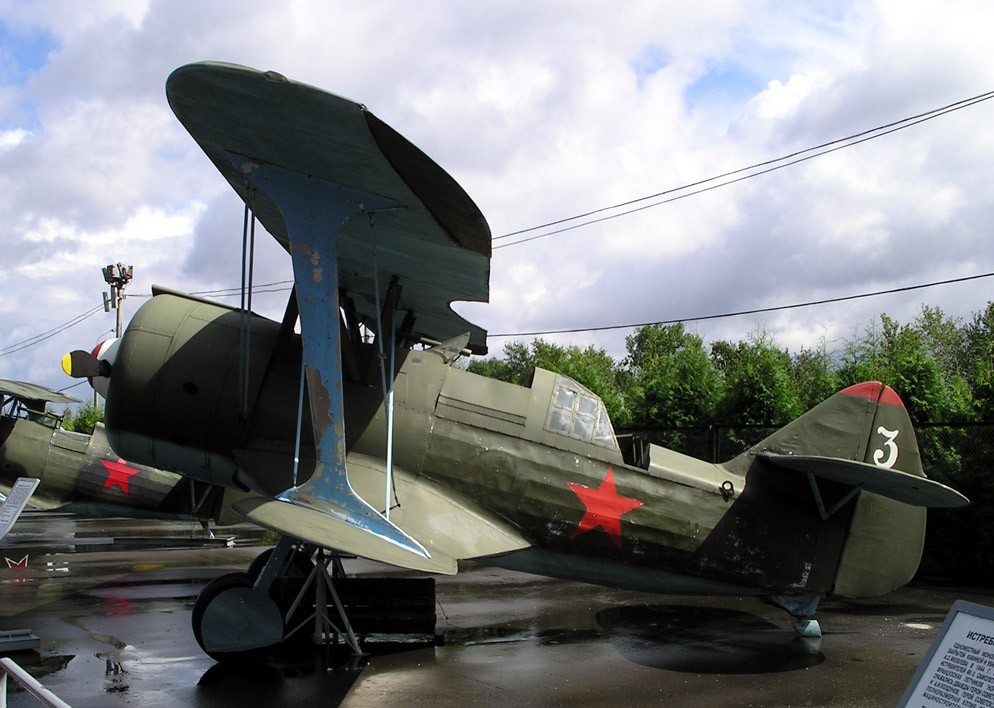
Came across this possibly lesser known WW2 fighter, the Kochyerigin DI-6 (ДИ-6). A two seater, it had an open pilot cockpit & a partially enclosed gunner's cockpit & retractable main gear. Production ran for a couple of years, 1937-1939 & it was apparently used as a fighter with ground attack capability. One interesting thing about it is the engine, a Shvetsov M25, which was a liscensed production variant of the B17 engine, the Wright Cyclone 9.The earlier ones were built from kits imported from the US; the later models differed from the R-1820 by the use of metric dimensions. The plane was supposed to have had quite a vibration problem.
Cheers, Willie.
[ATTACH=full]836[/ATTACH]

-
Something a bit different:
A rather dilapidated Il-76 Candid cockpit in the Emirates near Sharjah. Has quite a reasonable zoom-in resolution with the mouse scroll wheel; you can even read some of the lettering on the instrument & switch panels:
http://360emirates.com/virtual_tours/67/Ilyushin-IL76-Cockpit#
It has another one as well, an outside under-wing & side view. Zooming in on the tyres is highly reccommended.The site is a bit tricky & won't link to the outside view. The easiest way is to type 'IL 76 'into their search bar & it brings up both options.
Cheers, Willie.
-
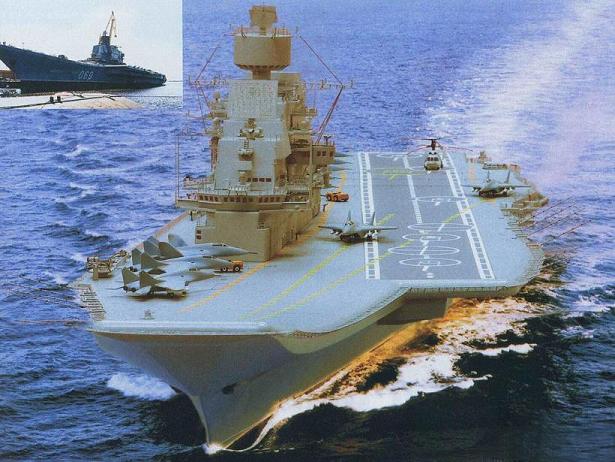
Here's a bit of background history of the Mig 29K in the above link, and that of it's carrier, for anyone interested.
The Mig-29K was a navalised version developed at the same time (late 80's), as the Sukhoi Su-27K (Su-33), both to compete for the new Soviet conventional fixed-wing carrier programme, on completion of the carrier, 'Admiral Kuznetsov'. Two classes preceded the Admiral Kuznetsov, the Moskva class, a helicopter only class and the Kiev class which combined helicopters and fixed wing V/STOL aircraft. The Kuznetsov was a modification of the Kiev class and resulted in a conventional carrier with a 12 degree ski-ramp launch deck. The Mig-29k project was put on hold when the Soviet Union was abandoned, but was kept alive by the Mig design bureau despite a lack of government funding. The Navy went with the Su-27, and the Mig-29k was mothballed until the recent carrier deal with India. The Kiev class 'Admiral Gorshkov' was modified with a flight deck and ramp similar to the Kuznetsov to enable it to use conventional fixed wing aircraft, so the Mig-29k's went with the deal. Now that it is back in production, economy of scale is one of the reasons behind Russia's descision to phase out the Su-27k by 2015 and replace it with the Migs.
Before and after photos of the RNS Admiral Gorshkov, now renamed by India as the INS Vikramadaditya:
[ATTACH=full]833[/ATTACH][ATTACH=full]834[/ATTACH]
The Soviets sure had a different way of conducting sea trials compared to the US.
By late 1989 the SNS Tibilisi, later to become the RNS Admiral Kuznetsov, was ready to conduct sea trials and carrier landings with the Mig-29k and the Su-27k. They had never done this before with conventional fixed-wing aircraft, although the prototypes had completed several take-offs and landings at land based test facilities. On the 20th October, the Tibilisi put to sea for the first time, making it's way down the river from the Nikolayev shipyard and along the Black Sea coast to the Crimean Naval base at Sevastopol. A week later, on the 27th, the flights began with gradually descending fly-overs down to a height of 30 metres. Next day, the 28th, saw the first touch and go's and this continued on until the 31st, when the first landings were made.
There was no designated body to give the go-ahead for landings and neither pilot knew they were to land that day. They circled for an hour and a half, then the Su-27 test pilot was told by the Sukhoi chief designer to go for a deck landing. He caught the second wire and came to a stop with a 90 metre landing run, the first conventional carrier landing in the USSR. He was followed half an hour later by the Mig-29k. The Mig design bureau didn't want to be outdone, so decided to take off that day, to become the first to do so. Half an hour after the Mig left, the Sukhoi Su-25UTG prototype landed, which meant three different aircraft prototypes making their first ever landings on a new, unpoven carrier that had only been at sea for a bit more than a week. Sounds like Rafferty's Rules. Both Sukhoi's decided to stay the night and take off in the morning.
The next morning, the test pilot attempted the Su-27k's first carier take-off. After being towed to the launch station, the wheel detents and blast shield were put in place. Sukhoi chief designer, Siminov, decided the 60 degree shield position was too close to the engine nozzles so he set it back at 45 degrees. Problem was, the actuators couldn't hold the shield in position at that angle, so, true to form, they welded steel pipe from the deck to the shield as a brace. The pilot cranked the engines up to full military power, blasting everyone in the vicinity with all the welding and cutting debris. He engaged full afterburner and waved for the detents to be released, but they stayed up and the aircraft sat in front of the shields at full afterburner for 14 seconds. This caused the blast shields cooling system pipes to explode and blow pieces of the shield in the air up to 10 metres away. Steam from the damaged shield engulfed the Sukhoi and most of the nearby onlookers thought it was smoke from the fighter's fuel lines, so they all bolted. Meanwhile, ATC gave the pilot the order to throttle back; as he did so, the strain on the detents eased which allowed them to retract. This allowed the plane to leap forward at a rate of knots, but the pilot was on to it and braked and shut down the engines. Undamaged, the aircraft took off a while later, starting between launch stations without detents or shields. So that was the Flanker's first ever carrier launch.
All they could do with the damaged shield was to cut off the braces, lower it, and repair it later at the shipyard. After a week's delay to process data, the flights resumed without any problems apart from the Su-25 prototype not having folding wings; this prevented it from using the elevator, so it was tied to the deck for the duration of the tests. The conventional powered Admiral Kuznetsov is due for a major re-fit in 2012, with planned removal of it's anti-ship missiles to increase the air wing and the possibility of a new propulsion system and fitting of catapults. The West desginates it as an aircraft carrier; the Russians call it an aircraft carrying missile cruiser, it's main role being support of other Navy ships and submarines. The Cruiser designation allows them to bypass the Montreaux Convention, which prohibits aircraft carriers from passing through the Dardanelles, the access to the Black Sea.
Cheers, Willie.
[ATTACH]18034[/ATTACH]
-
Nice shots, Darren. Just wondering what engines it has, Cyclones or Twin Wasps.
Cheers, Willie.
-
Looks great, Spin.Ha ha Willie, exactly what I thought when I saw this masterpiece at Watts Bridge a year or two back - beautifully built piece of art;Does it have a motor or do you just pedal it?
Regards,Willie.
-
-
Thanks, Spin, I'll keep an eye out for it when it's back up here.Lives at Archer normally, Willie. Previous owner had her hangared out at Watts Bridge.Cheers, Willie.
-
Just wondering where it's based when it's in Queensland?
Cheers, Willie.
-
Found some photos of VH-XBL on Airliners:
http://www.airliners.net/search/photo.search?regsearch=VH-XBL
So I guess that makes two airworthy, VH-MHR & VH-XBL, as VH-BOM, the one at Oakey has been there since 2007 on static display, so I don't know whether that counts as airworthy. I think it was airworthy & flying when donated. VH-BOM was supposed to be the first to fly in Australia since the end of the war, then I guess followed by VH-MHR, then VH-XBL, possibly in that order. So it looks like only three restorations/re-builds have flown here.
I hope I get to see one of them fly one day, have only seen the static display & there's nothing like the sound of a Twin Wasp. Unless of course you count the Cyclone 9, Twin Cyclone, Duplex Cyclone etc.
Cheers, Willie.
-
Doing a Google only mentions 2 or 3. VH-MHR at Temora, the Toowoomba one, now at the Museum of Army Aviation, Oakey, and possibly VH-XBL. The RAAF website was quoting only one airworthy in Februrary 2011, presumably VH-MHR. I think the Boomerang at Oakey was airworthy when donated, but is now on static display, so it probably doesn't count as airworthy. Does anyone know anything about VH-XBL, supposed to have flown again in 2009.
Cheers, Willie.
-
Thanks for the link, very short clip, but good. According to the local newspaper article, it could do about 160kph. Looking forward to reading the book of his account of the flight out here in the Halifax.A friend of ours here in Adelaide worked for Bristol during WW II and was involved in the engine prep work on the Halifax prior to the flight out to Australia.The Wikner Special ran at Lobethal Grand Carnival in 2008. Very brief clip here...Cheers, Willie.
-
Speaking of damaged props, Darren, it reminds me of one of R.M. Williams' stories in his autobiography that I read quite a few years ago. Apparently he was approached by a bloke in Alice Springs who claimed to be able to find Lassiter's Reef & was asking R.M. to fund an expedition. He didn't have any luck with R.M., so he eventually hired a plane & pilot & went out on his own, can't remember whether it was pre or post war, but it was a biplane from memory. Anway, they landed on Lake Armadeus, hit a soft patch and had a prop strike which broke the end off one propeller. The pilot spent two or three days with a sharp knife trimming the props to size & shape, losing about six inches of length in the process. The end result was not enough power to lift off with two people on board, so he left the prospector there with some food & water, flew back to Alice, then returned with another plane to pick him up. No drama this time as they'd had time to scout out a harder landing strip.Isn't it funny, the YAK, such a beast but wait...it has a wooden prop. A YAK owner here was telling me that they used to have lines on a part of the prop. If the prop was damaged you could cut it below the lines and it would still fly on reduced prop length...Cheers, Willie.
-
Thanks, Peter, really nice photos. That last one sure puts it in perspective, as far as size goes.
Cheers, Willie.
-
The old An-12 is a smoky beast, have seen a lot of footage of them & they always churn out a fair bit of black smoke. Seems to be a common trait with Ukranian/Russian cargo types, with their turbofans as well. He must have been pretty heavy, or maybe just lacking a bit of grunt, certainly would be interesting to watch.I had to go to Brisbane Eagle farm a few years ago, there was an AN12 took off. It took the entire length of the runway that heads to the east to get off. It then just hopped over any high ground and headed out over the water. There was that much **** coming from the engines it looked like the machine had a cargo of burning tyres!!! You could still see the trails from the engines 15 minutes later, bit different to western engines.Cheers, Willie.
-
And a classic old fire truck in the second photo. Lools like a 4wd 1418 Benz; the old Turtles are a collectors item in their own right.
Cheers, Willie.
-
Not sure if it's the same one in the news a month or two ago, looks very similar. They were talking about it's uses for law enforcement, surveillance, anti-terrorism etc. One theory was fitting cameras & flying it up alleyways or whatever to check out the bad guys, advantage being that it could bounce off walls etc without damage.
-
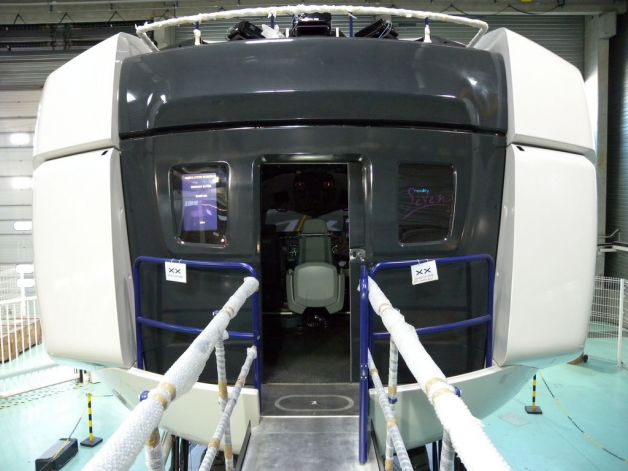
A look inside the Sukhoi Superjet SSJ-100 full flight training simulator. Built by French manufacturer, Thales. Lycos projectors & electro-hydraulic motion system, would be nice to have one in the garage.
[ATTACH=full]812[/ATTACH][ATTACH=full]813[/ATTACH][ATTACH=full]814[/ATTACH][ATTACH=full]815[/ATTACH][ATTACH=full]816[/ATTACH]
[ATTACH=full]817[/ATTACH]
[ATTACH]18029[/ATTACH]
-
A couple of links for anyone interested in the Caribou replacement contenders. The Airbus Military site has links to their contender, the C-295, as well as our future tanker, the A330 MRTT (KC-30A), currently undergoing operational test & evaluation by the RAAF:
http://www.airbusmilitary.com/
Cheers, Willie.
-
Thanks, Spin, I remember the mixup about Brisbane, maybe one day we'll see it here. Re the Il-76 crews, that word is certainly used a lot to describe them. Crazy is another description often used, there's been a lot of risk takers among them. Small outfits trading off maintenance for profits has been a long term cause of problems, as well as age & general airframe fatigue & other things like that clear liquid. They go through a lot of duct tape keeping some of them running, but I gather there's a few less independants around than there was just a few years ago. I guess in your time in Angola, you might have also run into a few An-12 & An-26 & 32 crews as well.Far as I know the answer for the An-225 is no - there was some excitement about a year ago (?) when it was announced that the 225 would be bringing one of the potential new military choppers to Brisbane for trials and it was claimed to be the first visit. As it turned out the journos had gotten it wrong and it was in fact a 124 that arrived - fortunately for me as I had an unbreakable appointment elsewhere.Re the video, whilst I can well imagine that the ex Soviet military crews are very experienced, I do wonder how concepts like balanced field length fit into their operations? I had a little to do with some of their crews in Angola and other similar holes, and whilst they were mostly pretty handy at the controls, the word "cowboy" was also often mentioned.Cheers, Willie.
-
If they're from a standing start, Michael, that might explain the Sukhoi holding the record, with the thrust vectoring nozzles allowing a shorter take-off & the high thrust to back it up. The initial rate of climb record held by the Mig might be on account of it's small size giving it a high thrust to weight ratio. From a standing start, it would be easy to imagine the P51 holding it's own for quite a while. The fastest speed record for a propeller driven aircraft is still unbroken since 1961, so anything's possible, I guess.I might be wrong that I can remember speaking to a P 51 owner at Oshkosh a long time ago and he was telling me how it was only recently that the jet aircraft beat the record held by a propeller aircraft, EG P51.... All of these records are from a standing start at runway level. Regardless, it is quite a climb rate !Cheers, Willie.
-
It's a good one, pity it's such a low resolution. Have been trying to identify it by the tailplane logo for quite some time, but no luck so far.The Il-76 crews change registration like we change our socks, so it might have had another paint job the following week. The guys in the tower seem quite amazed at the full use of the runway, but that's fairly common for an IL-76, they often use more than the runway. You can bet they've calculated to the last metre & kilogram. Most of the crews are ex Soviet & Russian Air Force, some with 35 years in the same type of aircraft & with plenty of experience in Afganistan & other areas of conflict. They were probably just glad no-one at Canberra was shooting at them as they took off. Il-76 pilots are some of the world's best. But back to the original post, does anyone know if the An-225 has ever been to Australia.Can't answer your question but I always enjoy watching this Russian II-76 taking off at CanberraCheers, Willie.
-
Yes, Ignition, I can agree with that. The Su-27 & it's derivatives are certainly up there in the most sucessful fighter list, it's certainly given western designers & engineers a few sleepless nights. It would be nice to have the spare 16 thousand for a flight in one. Standard flights usually include the sound barrier, tail slide, Pugachev's cobra , split S, Immleman, loops, rolls, power dives, climbs & turns, etc. They even let you do some turns, but I suppse at that price, they'd want to. The later models with the 3D thrust vectoring are nice to watch doing aerobatics; most of their aerobatic maneuvers have some military significance as the Russians have always been great believers in dogfighting & all train regularly to do it. Sukhoi test pilot, Viktor Pugachev was also the first pilot to take off & land a non vtol plane on a Russian carrier. I suppose that led them to develop the Navy variant of the Mig 29 with thrust vectoring nozzles like the Su's.Sukhoi SU-27 is my dream plane... Fast cruise, Long Range, Great rate of climb, Great manoeuvrability, Take off and landing runs aren't all that long...It was interesting in August to watch the 5th generation Sukhoi Pak Fa T50 prototype streaming live from the Maks airshow. Being the first public demonstration, I thought it would be a bit sedate, but they did quite a bit of aerobatics, although not as elaborate as the Su 27/35's. After it had a flame out & aborted take off, the T50 taxied past the Su 35 & it was quite noticable how much smaller it was compared to the Flankers. The Americans were there with their F15 Strike Eagle aerobatic crew & did themselves proud, although I don't know how modified their F15 is. But I suppose I could talk about Flankers all night, even if I had to talk to myself; bit of an addiction I guess.
Cheers, Willie.
-
In the first & third photo it looks like the leading edge slats are lowered for slow flight, but they appear as though they would have a pronounced down slope in the fully up position as well as protude forward of the wing root quite a bit. This looks like the one they talked about with the seating cross ways running into the wingsI will try and find out some more information although you guys probably no more than I ever will! The only bits of information he told me was the design was for a new passenger carrying aircraft that could take up to 1500 people more than double what is now available. The aircraft has two floors like the A380 but it has no windows except for the cockpit so he mentioned they were going to make away to have LCD screens on the sides of the aircraft which would show passengers the view just as if they were looking out the window.... Bizarre but true. The plane has the word "X" in its title so it may be that it never enters production but instead is a proof of concept...... if you haven't heard much about the aircraft since 2007 then it is probably fizzled but I did find the photo is really interesting especially the leading edge which looks like it hangs down a long long way.
Ww2 Biplane
in Warbirds, Vintage and Classic Aircraft
Posted
Cheers, Willie.