

pylon500
-
Posts
1,423 -
Joined
-
Last visited
-
Days Won
9
Content Type
Profiles
Forums
Gallery
Downloads
Blogs
Events
Store
Aircraft
Resources
Tutorials
Articles
Classifieds
Movies
Books
Community Map
Quizzes
Videos Directory
Everything posted by pylon500
-

Cheap 2 seater anyone?
pylon500 replied to Head in the clouds's topic in Aircraft General Discussion
I guess we will, we enjoy designing and building. Come back and show us your inflatable electric jumping castle, once it's finished. Meanwhile, we will debate the merits of tailwheel over training wheel.. ps, to get out of quote (on a Mac) I just press the down arrow... -
Cheap 2 seater anyone?
pylon500 replied to Head in the clouds's topic in Aircraft General Discussion
Actually, that's why they fly...... They're so ugly, the Earth repels them (upwards) -
You're right, only one fold so A3, it's late, been a long day
-
Airscrew, Propellor, Propeller Tuning
pylon500 replied to Head in the clouds's topic in Engines and Props
Sort of what I said, but if you haven't changed the angle of the under surface of the blade, then you have only cut down area (which can help) but not pitch. -
Cheap 2 seater anyone?
pylon500 replied to Head in the clouds's topic in Aircraft General Discussion
There's actually another reason for the staggered seating, in that where you have an aircraft with the pilot in the front, then generally he/she is the balance weight for the aircraft. You now get the situation where one pilot would leave the aircraft tail heavy but two pilots make it nose heavy. A lot of the advertising for 'forward' seated aircraft don't tell you about the balance weights you have to lug around with you, to adjust between one up and two up. There are even some 'normal' aircraft out there that have this problem, just because the pilots don't sit right on the CofG. I learnt to fly in a glider that had this staggered seating arrangement (ES-52 Kookaburra); https://plus.google.com/photos/113292981019876413104/albums/5208737076349224081/5208737729184253106?banner=pwa%3E Which had multiple benefits, great view for the student, but an instructor that can still point to things for you, Slim fuselage as mentioned and the need for only one set of instruments. Some will point out that if you were a scrawny 16 year old as I was then, I still needed a couple of weights up front if I went solo. -
Airscrew, Propellor, Propeller Tuning
pylon500 replied to Head in the clouds's topic in Engines and Props
HitC is going to hate me for this but, when I was describing the prop I made in; https://plus.google.com/photos/113292981019876413104/albums/5573889605855816225?banner=pwa> Once I started running it I found it was over pitched. Initially I trimmed it down in diameter, about 1½" off each tip (picture 14). I was now getting closer to planned static RPM, but during strip runs, it stayed just below, so I needed to 'depitch' a bit. This is done in picture 15 & 16, where I used the old carpenters trick of holding a pencil between thumb and forefinger, while 'gauging' the edge distance with the third (social?) finger, to mark a tapering line on the underside if the trailing edge, starting with nothing at the root, widening to about 3/16" at the tip. I then shaved this rear section away with a small wood plane, leaving a flat edge along the trailing edge. Using a coarse half round file, working from the trailing edge forward, I filed away the underside towards the leading edge, until the trailing edge was nearly sharp again. Once you get the hang of this sort of thing, you can do it with some pretty coarse machinery (big angle grinders), then finish with your choice of varnish again. Trying to add pitch is a little trickier as, shaping the top surface to a trailing edge cut or shaving the underside to a Leading edge cut, will coarsen the 'helical pitch' of the blade. -
No calendar? I got one, only a fold out A-2 size for the whole year, so not much use, but I got one. Complete with ads around the edge.....
-
And solar powered electric......
-
Good move Ian, thanks. Small aircraft?, define small...... Small enough to pick up! And yes, it flew..... Arthur.

-
Cheap 2 seater anyone?
pylon500 replied to Head in the clouds's topic in Aircraft General Discussion
OK, I'll have to admit that I hadn't read all the post before I added, was actually over on HBA being amazed at the work so far on our current machine Alan. Serious work.. As for the concepts in my (un-named) pusher; •Simple folding wing hence taildragger. •Was looking at reducing hangar space rather than roadability. •I think you should be able to find a running 912 for less than the price of a new 582 with benefit of more power and less fuel burn, not mention quieter. •Yes, all metal construction, not really considering any fabric, quicker to build, can store outside and only about 3~5% weight gain. My fin is good for stall/spin control but is a bit short moment for span, and more-so against my forward keel area:pull hair: May end up with tip fins on the tail like the Challengers. Not happy with the torsional loads on a 'boom' style fuse when side-slipping a T tail. My previous aircraft had a similar tail position, no-one walked on it, but it gave their shins a bruising. So, are we going to become Australia's HBA? -
Cheap 2 seater anyone?
pylon500 replied to Head in the clouds's topic in Aircraft General Discussion
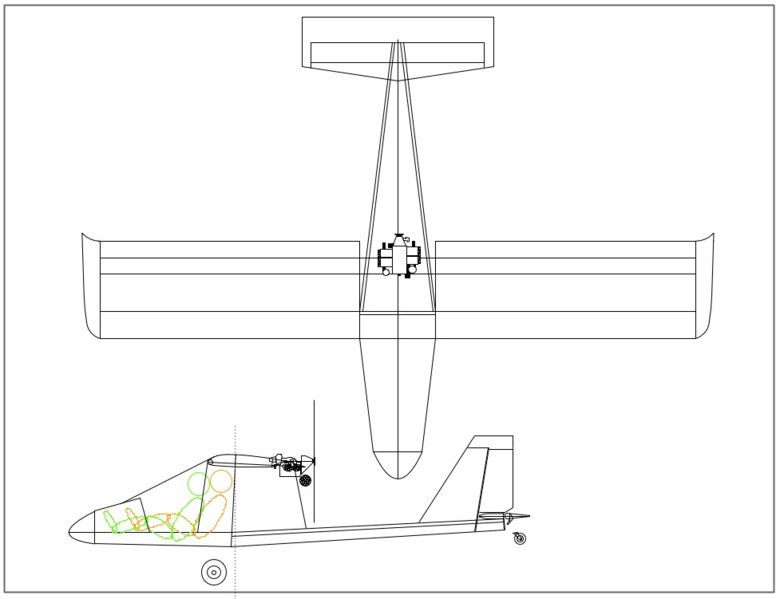
Had a request for a craft similar to the posts initial parameters, two seat, slow, STOL?, folding?, side by side (sort of). This is only an initial draft, but the thoughts are, Foxbat style wing and flaperon, ThuderGull Odyssey styled staggered seating, taildragger for simplicity (but convertible to nosewheel?) but the big difference to the original plan is VISIBILITY, hence a pusher configuration and to be powered by a second hand 80hp 912. Comments?
-
Every RAAus fatality should be investigated by the ATSB. I guess they spent all their money on the Ferris Wheel Incident, no fatalities there?
-
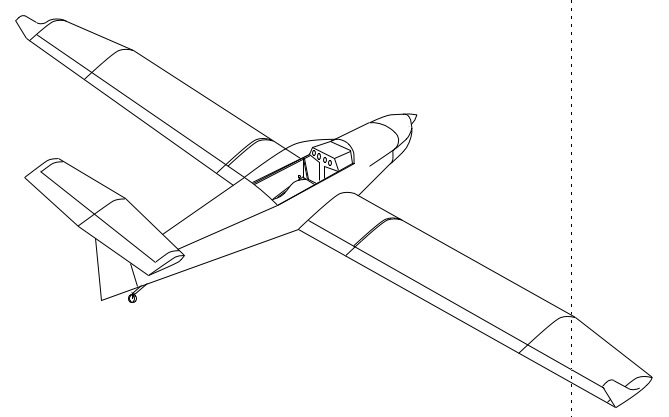
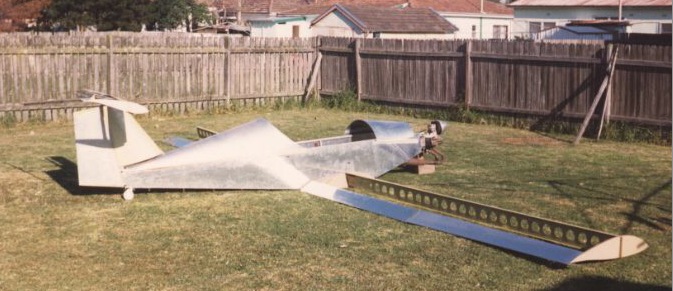
Thread drift? That may be closer to the truth than as I've heard it? My recollection was that George had bought a Sapphire (after being involved with the Ray Tolhurst Stingray, derived from the Winton Grasshopper, Through which he met Scott) and was want to fly a bit more than straight and level. After a few complaints, and the fact he was aerobatting His Victa, he decided to talk to Scott about making a real VH aerobatic based on the Sapphire. No doubt Graham Swannell was involved with the engineering and paperwork, although I think Graham was still based in W.A. at the time, and it wasn't long after that he came out with the 'Maverick'. Scott had a factory unit next to Bankstown Airport (where I worked), so now and then I would go around and see what was the latest. After the Ultrabat, George had Scott start on the moulds for a scaled, composite MkXIV Spitfire! The plugs were finished, and I think the moulds were basically done, to be built light and fitted with a two stroke as an ultralight. Many years later I caught up with George, and he was talking about 'beefing' up the layups and fitting a small V6 for the VH category, around the time of the 'Thunder Mustang', predating the Titan Mustang and the Sullivan Spitfire..... Strangely enough, the T-Star started out as a highly modified Cri-Cri, by the time I had finished the changes, it was pretty much a Moni with a T tail. It was then clipped to become a sport plane, but now I'm thinking of going back to a motor glider layout; The dotted line is a CAD error! Arthur.
-
There's those that can, and those that can't.
-
WOW, so you were the designer and builder?!! I may have even spoken with you at Townsville, probably around '78? You had the 'Cub' lookalike there as well (got a photo somewhere) can remember a blue flashing light fitted to the roof? So, do you have any sites on the net with more photo's of the Macro's? Do you still have any plans?? The T-Star is hanging from the roof of my hangar, sort of made obsolete by the glass racer I started, have been thinking of adding tip extensions and going back to being a sort of motor glider. Keith's Australite was like a little ASK-14, low wing, normal tail, fixed centre wheel, Robin 250 single up front, all made of wood. Looked like a big radio model. The Ultrabat was a joint venture, mainly by Scott Winton, and inspired and funded by George Markey. Pretty much a 'Super Sapphire' I will have to get another slide scanner and upload some my past history shots.....
-
I remember seeing the Cygnet at Schofields, somewhere between 78 and 82. I dug up a slide I took of it then (and have spent the last hour trying to get my scanner to work:angry:) and remember thinking that I was not too impressed. Basically looked very short coupled and had very small all flying tail surfaces. I was also not too keen on the 'structural' welded alloy tube framework. I should point out that back in those days I was in the RAAF fixing high tech military equipment (Hercs') while flying high performance (then) fibreglass sailplanes. When I used to go out to 'St Marys', I was usually amused by the general lack of knowledge of structures, control systems and piloting skills. As I gradually accepted the idea of ultralights, they also improved to meet my expectations, however some did not..... The Cygnet would have been one of them. As for the MACRO, I first saw this while on attachment to Townsville and was totally amazed at this beautiful piece of work. Shades of Keith Jarvis(?) 'Australite', seen at one of the Mangalores'. (Can't find any pictures, no not the UltraBat.) It would have been some of the inspiration to start designing my first airframe, the T-Star; Seen here; <https://plus.google.com/photos/113292981019876413104/albums/5194984638789924465?banner=pwa> I never heard any more of the Macro, but love to know more about it. Arthur.
-
OK, can't resist myself, just have to post this, even though everyone has probably seen it.....
-
Airscrew, Propellor, Propeller Tuning
pylon500 replied to Head in the clouds's topic in Engines and Props
OK, I'll throw another spanner in the calculations and mention 'Reynolds number' Too deep to go into and more relevant to making model props.... Sounds like the case at first glance, but reality is that the tips work best while static (I'm talking fixed pitch here), Once you start to get up any speed, the tips tend to go towards zero relative pitch, thence less power absorbtion and increased RPM. Result is, shorter prop gives less takeoff performance but a faster cruise for the same RPM. Naturally this also appears on a graph curve, so it still needs to be matched to torque, airspeed, aircraft drag, etc, etc. -
I sent the newly (2007?) required photos via e-mail, on behalf of an owner, for a 25 class aircraft, and the registration was finalised, approved and sent to the owner. Aircraft flying again......
-
Can I assume that with a fatality, that the ASTB should be involved?
-
Airscrew, Propellor, Propeller Tuning
pylon500 replied to Head in the clouds's topic in Engines and Props
Just for interest; <https://plus.google.com/photos/113292981019876413104/albums/5573889605855816225?banner=pwa> -
Airscrew, Propellor, Propeller Tuning
pylon500 replied to Head in the clouds's topic in Engines and Props
There is possibly two fronts to look at this. When you talk torque curves for engines, the reason they drop off near the top is usually caused by the engines inability to continue breathing and porting at higher RPMs, unless it's turbo'ed, and eventually even that ratio will give up. The other factor is as mentioned, that the prop is stalling near the root (while static) because of the high pitch inboard. Really high pitch props can stall, cavitate, FLUTTER while static, if you can get enough torque 'up' them! I've heard flutter a few times over the years, typically on VW and Jabiru engines running small diameter, high pitch props. I've also heard it when not so clever people have put props on backwards!! yes it happens. RickH, the prop size thing is to do with the operating RPM's of the different engine/reduction systems. A 503 at 6800 with a 3:1 C box has the prop turning at 2266 RPM, a Jab (which is direct drive) needs to run to 3300 RPM to put out any power, so the prop diameter needs to come down to stay sub-sonic. -
Always a shame to loose a fellow pilot, let alone a fellow Lightwing pilot. Not 100% sure, but would this be the first fatality in a Lightwing in their 28+ years of operation? Will wait to find out what happened... Condolences to family.
-
I'm not sure which branch of the Gestapo you're worried about, but I'm fairly sure the printed copy should suffice, as this gives traceability to the real registration. Maybe a copy of the receipt as well...?
-
G'Day Nunans, yeah, there's a few assorted things going on there.... Most GR-912's tend to run nose heavy, and part of the original design philosophy was to limit the elevator travel, hoping to create a 'mush' instead of a full stall. Unfortunately this mush develops into around about an 800 fpm (or higher) decent rate, not the sort of rate you want to contact the ground at ! Elevator gap seals here are important. As a side line, I should point out that aileron gap seals are MANDATORY on a Lightwing, it flies really badly without them. There is also another problem that is not spoken about much, or totally proven/disproven, that deals with the shape of the cabin roof, and the airflow it causes over the tail at high angles (flaring) of attack. Depending on the fit of the gap seals and number of antennae in the cabin roof, it is suspected that during flare, airflow over the cabin prematurely separates causing a drop in elevator response as well as triggering an earlier onset of stall, ending up with your 'drop on' effect. I may sound vague here about a definite tendency because, of the 9 Lightwings I've flown, only 3 of them did this noticeably, the rest were fairly docile. The GR 582's are easier to flare and land (at idle) as they are lighter and have the undercarriage in the right place (it's a long thread, but I explain that statement here; http://www.recreationalflying.com/threads/the-lightwing-mystery.6696/page-2#post-235738). The GR-912's with the U/C further forward prefer to be 'three pointed' as they are easy to bounce, BUT some GR-912's can be wheeled on as easily as the two strokes?? All my landings are based on dead idle, full glide approaches, anything is easier to land with a bit of power, but one day you may not have it.......