
pylon500
-
Posts
1,423 -
Joined
-
Last visited
-
Days Won
9
Content Type
Profiles
Forums
Gallery
Downloads
Blogs
Events
Store
Aircraft
Resources
Tutorials
Articles
Classifieds
Movies
Books
Community Map
Quizzes
Videos Directory
Everything posted by pylon500
-
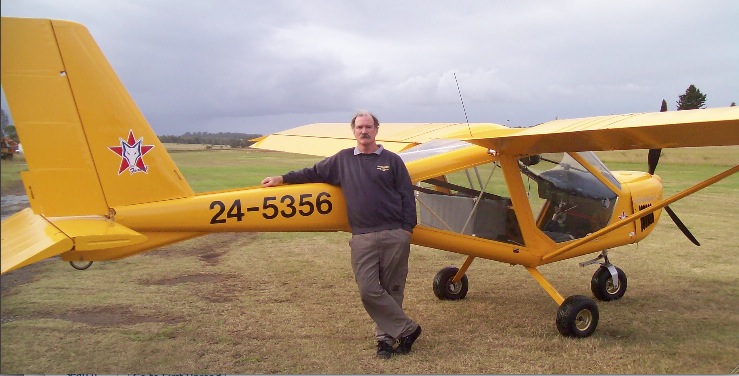
Yes, the pitch (attitude) change with flaps is noticeable, but more importantly is the change in adverse yaw as they are flaperons. When instructing my students into flap use, I usually suggest that with; •No flaps, just think about using rudder, •One stage of flaps, definitely use rudder to coordinate, •Two stages (full) flaps, almost forget about the ailerons and fly with rudder. Having said that, I only teach the use of full flap very late in the training for short field work. Generally, normal take offs are done with no flaps, and landing with only first stage flaps. Crosswinds above 8~10kts, land without flap. Another point, the electric trim is slow, and will only just trim one stage of flap. Can get interesting with full up trim if doing touch and go's, as you have to watch the pitch up with power. All that aside, I still think this is a great training, or even private, plane. I've named this photo 'Foxbat_B', as this is an A22L, but the later model with smaller fin.

-
Weights tend to vary through the years, would need to know the serial number (usually up on the door hinge bracket), then ask Howie what it should be. ps; There is a Lightwing discussion area elsewhere on this site...
-
Technically you are correct, however, overall span becomes a function of turn radius. The answer then becomes small spans, with high aspect ratios, ie; small wings! The new trend is to build small gliders, that are very light, and can then fly with a smaller wing area, which can be translated into small, high aspect ratio wings... Have a look at the SparrowHawk Glider; Empty weigh = 70kg! Span = 10.9m, L/D = 37:1 similar to an Astir (for half the weight).
-
 Cut out singular parts. If they get it wrong, you throw it away. If they join parts and get it wrong, you have to throw away both parts... Avoid letting them drill holes, even the pro's regularly screw that one up, remember, 'Measure three times, cut/drill once' I wouldn't expose them to anything chemical this early in life, (glues, paints, resins, cleaners) or especially any 'small particulate' materials, (glass fibre, carbon fibre, aluminium dust{?}, sanded foams, sanded resins) Pop rivets are fun.....
 -
Ultralight plane crash Hunter Valley
pylon500 replied to ave8rr's topic in Aircraft Incidents and Accidents
Motor was a UL-6, not sure what power, 140 I think? Not sure of the prop, but constant speed, note also one blade fully intact, ie; not turning on impact? The plane was a CLONE of a Cheetah/Sierra, before people start pointing at Gary. Most likely too many problems all at once for the pilot to handle, ie; engine fails, not a lot of height, not knowing it's glide performance, looking for somewhere to land, trying to restart?, stall/spin before chance to pull chute... Can't comment on registration status. We'll just have to wait... -
Very impressive site, far more detailed than the site I've been using for the last few years; http://wind.willyweather.com.au/nsw/mid-north-coast/taree-airport.html
-
If you did a gas conversion on it, and ate beans, it would be self fuelling...
-
To tell the truth Joe, I thought Vans did a good job designing the -12 around the Rotax 912s, if you want more power than that, there's always the 914, or you could look at the Italian super charger kit mod. Expensive?, well I guess you only get what you pay for... If you like the look of Jabiru because it reminds you of ancient big iron (Lycosaurus), then you could look at the Lyco 233, but be prepared to fit your own ignition system (see elsewhere on site).
-
http://www.gizmag.com/aeromobil-flying-car-prototype-crashes/37473/ Looks like it got into a spin, and deployed the ballistic chute...
-
Does that mean the screwdriver has stalled?
-
As Facthunter said, moving weight outwards from the centre lessens the span-load concentration on the spars. The amount of fuel this would need to carry (don't be surprised if this chews 90+ litres an hour!!) would create too much load, requiring the wings to be stronger (heavier). Actually, thrust line looks to be above the line of the stab, PLUS, with a high mounted engine like that, it would probably have a small amount of 'up' thrust to balance the power / pitch couple, giving more clearance. The only problem I have with the layout is the direct side by side seating. In bigger aircraft (like the Provost), the overall weight of the crew forms a lower percentage of the all up weight, so the difference between 'one up' / 'two up', is less noticeable. As aircraft get smaller, this becomes a bigger problem to the extent that many small (read ultralight) planes need to carry moveable ballast (read dead weight), to stay within their weight and balance range. There seems to be a continual resistance to the concept of staggered, side by side seating yet from a technical point of view, it seems almost better than all other layouts; •Pilot / student has expansive view, •Much wider cockpit than tandem layout, •Aircraft can be narrower than full side by side (aerodynamic improvement), •Instructor can still relate physically / visually with student, •Still only one set of instruments required. So I'm guessing people hope it's going to be in the $250k region, but probably end up more like $350k finished.
-
And the runners up in the Darwin Awards are..........
- 1 reply
-
- 1
-

-
Interesting video of how to recover from a spin
pylon500 replied to recflyer's topic in Student Pilot & Further Learning
These guys used to do their spin training just near The Oaks airfield (my home club and field). It was interesting to watch the recoveries, just as demonstrated, by using rudder only. Actually a bit of a concern as the aircraft would be in a stable spin, then the rotation would slow and the aircraft would pitch down into a vertical dive with some of the residual yawing motion converted to a rolling motion, giving the appearance of an uncontrolled spiral. Many recoveries looked to be very close to VNE... The Robin 2160 (now known as the Alpha 160) is noted for it's large rudder, which will tend to 'blow over' in a spin, thereby maintaining rotation. However, the 'hands off' spin is a bit of a worry as it shows that the all flying tail has little tendency to recover extreme pitching events? Still, a good little aerobatic trainer. -
Regards the prop; Direction? Number blades? Ground or in flight?
-
If you remember correctly, when turning an aircraft; •The ailerons only roll the aircraft for the turn, •The rudder helps overcome the adverse yaw of the ailerons, •The aircraft only really starts to turn when you apply pitch (elevator) while in the bank, thereby adding angle of attack to the wings. If you apply flaps (normal or even more-so flaperons) while turning you are adding more angle of attack, and thus likely to be overpitching the wing. If you have flaperons and pull flaps while turning, you will possibly lose speed while at the same time notice the nose tending to go down (flap pitching), and instinctively pull the stick back to compensate, losing more speed, and adding more angle of attack. It's about this time you will want to roll out of the turn so you apply opposite aileron and, if you're lazy, not use enough rudder to balance the rollout, leading to stalling the inboard flaperon thence wing. Aircraft rolls onto it's back into the turn, end of story, plane and you.
-
Guess I'll have to use this until the BOM gets their dartboard fixed.....
-
Can't find any evidence on the web, but I remember someone doing this at Bankstown back in the 90's. May have even been an Aerostar, could have been a Seneca? He was doing a powered touchdown, heard an antennae scrape and powered on and went around. His props touched before reaching full power and he came back with 2" Q tips.
-
Maybe the opposition leader can rein them in...
-
Makes a substantial difference. Gazelle oil tank is fairly high on the firewall so nearly 50% of the oil can run back into the engine. Foxbat tank is fairly low, it will burp in one turn of the prop. I think your Gazelle problem could be if you're using a low viscosity synthetic, could be running back as fast as you pump it? I had heard (if it's not in the POH) to start the engine for a minute, shut down, then check the oil. Not real clever in my books.
-
Normally if a bolt and nyloc nut are done up somewhere, as a permanent fixture, it can be regarded as a set and forget item. However the bolt in question is possibly clamping a lead mass weight, and with time and vibration, lead can creep allowing the bolt to lose tension. Loose enough for the bolt to fowl the controls? Probably not, and very noticeable signs of the looseness would be apparent before the bolt had enough movement to bind.
-
Should be a drilled head and lockwired...
-
World Record Attempt at Otherton. . . .
pylon500 replied to Phil Perry's topic in AUS/NZ General Discussion
45° in pitch, 60° in roll... -
Hope the fin doesn't melt off.......
-
World Record Attempt at Otherton. . . .
pylon500 replied to Phil Perry's topic in AUS/NZ General Discussion
Probably better off with something like a Foxbat. 30lt fuel, 1500+fpm climb, big sideslip back down. All within the confines of the airstrip. Maybe a GR912s Lightwing would be better, harder sideslips . -
aircraft spruce waiting waiting waiting! !!
pylon500 replied to Montymagic's topic in AUS/NZ General Discussion
If Spruce is short of stock, they usually give you the choice of holding the whole shipment until complete, or sending stock on hand, followed by the delayed item. Problem is, if you do it the second way, you pay two postages. Having said that, if you had a $5k order, paying for a second shipment probably wouldn't worry you. Also, you probably now know that orders over $1000 (including postage) will incur GST.....