


Old Koreelah
-
Posts
6,237 -
Joined
-
Last visited
-
Days Won
55
Content Type
Profiles
Forums
Gallery
Downloads
Blogs
Events
Store
Aircraft
Resources
Tutorials
Articles
Classifieds
Movies
Books
Community Map
Quizzes
Videos Directory
Posts posted by Old Koreelah
-
-
Video pleaseDespite the instructions I managed to assemble them... three ornithopters my wife bought for the kids while she was in China. They're actually a brilliant little kit with exactly the amount of material required to build them. Apparently cost the grand sum of 2 yuan each (around 40 cents). They also work, flapping around the room sounding exactly like a trapped bird.(It's the only aircraft building I've been doing lately!!)[ATTACH=full]43470[/ATTACH]
-
If you're bringing your own camping gear you can set up under the wing or in the campground nearby.
Perhaps the best is the cabins (Narromine Tourist Park). Rooms are not numbers, but named for iconic aircraft.
The Aero Club puts on good meals drinks, and is a great social venue.
Peppercorn Inn (Home) is a few hundred meters away, on the edge of town.
There are other places in town.
-
 1
1
-
-
Both CAMit and Jabiru sell oil return units, so presumably they think that on balance, it's worth the risk.
Both these units are mounted to the engine so they should get hot enough to boil out the nasties.
However, I'm inclined to take Nev's advice and hasten slowly on this one.
-
Bex this approach might get the cost of the basic airframe down, but that's only a small part of the build.... I am trying to end up with one of the cheapest kit planes in the world ...Constructing a plane is like building a house: after the walls are up, the roof on, you're about a quarter of the way.
-
 1
1
-
-
You are quite right, but that will have to wait till I can get the right person to do it.If there's that much blowby the engine needs reconditioning! -
Nev that's why I had resisted the idea of returning recovered oil. Interesting that both CAMit and Jabiru sell recovery units.Your call. When and where is the moisture "boiled off"? You'd be better to have a way of pumping a bit of new oil in from a remote tank for longer trips. I've seen the mess that gets in those places where the moisture condenses. Water forms acids with most products of combustion, in pretty high concentrations. You'd have to go to over 120 degrees (well over). It would remain highly contaminated. Still need treatment with chemicals and for so small an amount not worth the risk. Nev -
That was originally my opinion Nev, but I was advised that these units allow moisture and other volatiles to be boiled off, so that oil being returned to the engine was kosha.I wouldn't in any circumstances return any of that contaminated oil to the engine. If you want to stop oily belly empty it out now and again. NevMy catch bottle has worked okey for years, but my engine is now using oil, so I'd like to re-use it for longer trips.
-
 1
1
-
-

Thanks Frank and everyone else who responded. Jabiru sent me some pix this arvo. Apparently this unit replaces the oil filler T. Will get more info tomorrow.Now available at Jabiru.Meanwhile, I'd be interested to hear of anyone's experience of this unit.
-
I want to replace the simple oil vent catch can on my Jabiru engine with a canister to collect oil and return it to the sump. On longer flights this might prevent running low on oil.
I'd like to use the CAMit design, but it requires dismantling to drill an oil-return hole in the casing.
I can't seem to find one ready-made; people suggest I build my own.
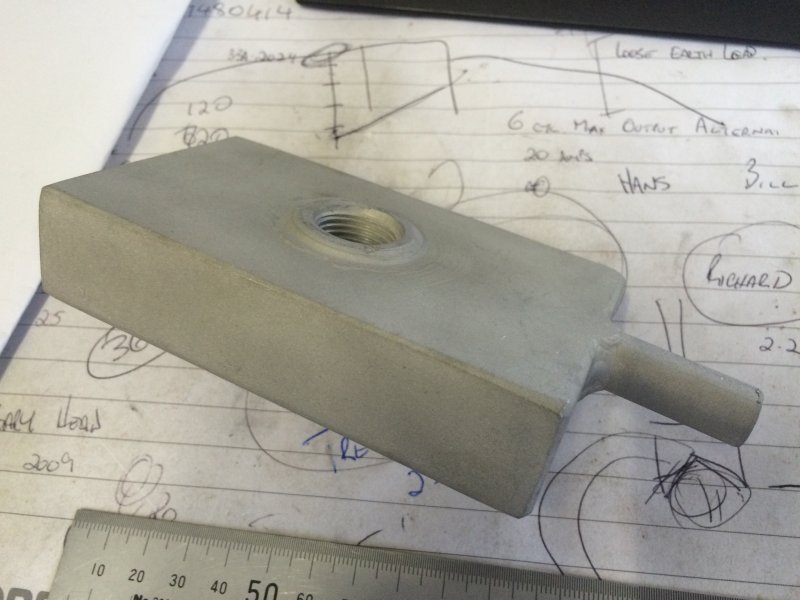
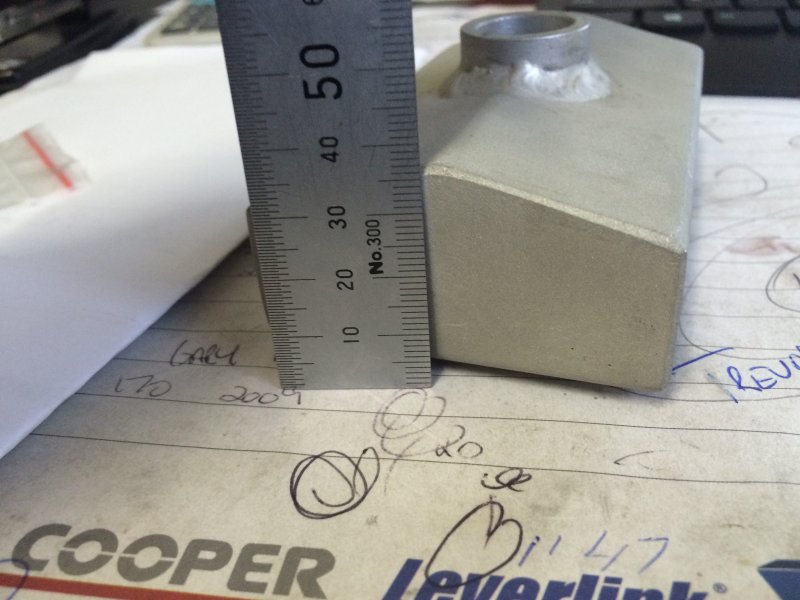
My solution: a home-made flat canister mounted close to the dipstick so oil mist can enter, be condensed out and accumulate. Water vapour and other nasties can pass out thru a tube at the top, routed down under the aircraft.
Problem: how to allow the oil to accumulate in the catch can without blocking the single small entry hole?
Solution: slope the flat canister so that oil can only drain back into the engine when aircraft is sitting on tail wheel.
I have only a vague idea of what's actually inside a functioning unit; I'd rather use metal mesh than stainless steel kitchen scourer (I don't want scrap metal draining back into the engine).
Any suggestions and advice welcome.
-
...which is why we're better off with wool tufting and a fixed GoPro or similar.The only problem with the "before flight" thing is that the pattern might change with the different parts of the flight, and you will get a cleaner picture if you just do it at cruise.-
1
-
-
Looks intriguing, Bex. How does the weight compare to traditional airframes?
-
No, I was referring to the Russian preference for rugged, low maintenance aircraft.Please tell me that doesn't include the philosophy of widespread non precision bombing of Syrian civillians? -
I haven't seen this doco posted here; shows some major differences in fighter plane philosophy between the Russians and Americans. I known which one I prefer.
https://www.youtube.com/watch?v=K3fr02KWI_o
-
 1
1
-
-
Can't help you Bruce, but his absence from the forum has been noticed here as well.
-
1
-
-
Clever bugger that Bex! Instead of paying squillions for dodgy "market research" he taps into our planet's largest repository (suppository?) of Rec aviation experience....One of the purposes of showing stuff on the net is to get feedback good or bad to aid in the decision making process and irrelevant of what is a good method or not...-
 1
1
-
1
-
-
...just wait till the Reds come back, comrade!... He had the hide the other day to ask if he could have some meat with his bowl of rice for it, don't know what this place is coming to, they see one Western movie and want freedom FGS... -
Thanks for that, P M.
Apparently often mistaken for a Zero (very similar, same engine.)
Nakajima Ki-43-I Oscar | Japanese fighter aircraft
-
Anyone know what became of it?There was indeed a Zero... -
Thank you for the awesome tours (and the nice music). What is that script between the Latin and Cyrillic?
-
Crickey Nev, that would get their attention!
-
Well I never.. I've been flying right over Terra-whatever every time I go to Narromine!Not kidding![ATTACH=full]43216[/ATTACH]Hope to see you at OzKosh in October.
-
1
-
-
Grew up in an isolated valley (my pen name) and read voraciously about flying adventures. About the only aircraft we saw was a regular low-flying freighter. Its slow revving radials got me hooked. (Many decades later, at a fly-in, I met an old aviator who turned out to be the pilot of that old plane!)
Gliding in the 70's was curtailed by domestic responsibilities; like a lot of blokes here, years later my wench gave me every support in getting back into the air...and out of the house.
-
1
-
-
Welcome David, good to see another one brave enough to tackle 'real aeroplanes'!
Where the hell is Terra-bloody-mungamine? Sounds like a made-up name to me!
-
They are ideal for a Jab engine Bruce, but one more thing to think about. I close them down on descent to reduce the rate of cooling (and keep some heat in the system to combat carby ice) but it's easy to forget to open then again if you go around. The ideal is automatic adjustments, but until then I'm working on some "compromise" settings to reduce the workload.
-
1
-
Wall size WAC chart
in AUS/NZ General Discussion
Posted
Depends how much you love maps, Andrew. I do and have covered a wall with 1:25k topo maps. Even at that scale the lat/long lines are hard enough to line up. If you really, truly want accuracy, curve your wall: apply a bit of maths to the wall framework. With care and water, gyprock can be curved.