


old man emu
-
Posts
5,297 -
Joined
-
Last visited
-
Days Won
78
Content Type
Profiles
Forums
Gallery
Downloads
Blogs
Events
Store
Aircraft
Resources
Tutorials
Articles
Classifieds
Movies
Books
Community Map
Quizzes
Videos Directory
Posts posted by old man emu
-
-
I think he was ex-navy, had a grey beard from an old distant memory
Don't you just love stories of people getting unexpected inheritances from long lost relatives.
-
Was that the Neil MacDonald that used to fly for the Transavia factory?
Quite possibly. Transavia were Sydney-based and the Neil I knew was also based in Sydney - Bankstown. He may have also piloted Illawarra's P-51 for target towing. I remember that he flew the first Subaru into Australia Fuji FA-200 Aero Subaru - Wikipedia
-
You could give Gostner Aviation ( (02) 4655 8455 ) at Camden a call to see if they can help. Failing that, try Dave's Flying School at The Oaks ((02) 4777 4566 ). I can't help with Bankstown.
-
There was a Neil McDonald who was CFI at Chieftain or Illawarra Aviation, Bankstown in the 70's. These two schools were associated, and had a club-like social side. Back then, they did long flying safaris involving students and club members. Looks like this inscription is a souvenir of one of those trips, with Neil as leader.
The unreadable signature 2240 is probably 2230 which is the postcode for the Cronulla area in the east of the Sutherland Shire. The 2729 is probably 2229 which is the Caringbah area, adjacent to the Cronulla area. So one surmises that these two are mates.
Ray Cowley could be Corboy and the postcode could be 2132 - Croydon, Sydney.
-
Wouldn't the neighbourly thing to do would be to have your brother visit the property and simply ask the owner, face to face? Just let you brother know what type of aircraft you want to use on the strip, and why you would appreciate access to the strip.

-
"If a man says something in the woods, and there are no women there, is he still wrong?"
I asked my wife and she said, "Of course."
-
 1
1
-
-
We'd like to read the newsletter before committing to a petition.
-
Party at Ian's!!!!!
-
1
-
-
Here's a hot rod project - get a Bren gun carrier and replace the low powered flat head engine with a more powerful modern engine.
-
 1
1
-
-
That Bren gun carrier was a great piece of machinery. I'd love to see a competition between the Bren gun carrier and the Jeep. This video makes you think that as a battlefield vehicle, the Bren gun carrier would out do the Jeep. Not so great as a vehicle for simply conveying passengers in off-battlefield locations.
-
We also made aero engines and aircraft instruments.
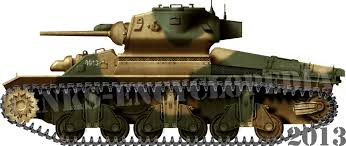
Here's a view of the AC1 Sentinel
Although we built 68 of them, the manufacturing might of the USA made it more economical to simply concentrate on servicing the US types.
The other Aussie variant of a foreign design was the Bren Gun Carrier.
(Sorry about the Kiwi bragging)
The LP2 and 2A carriers were the most prolific of the carriers produced in Australia with approximately 4800 being built. They were manufactured between 1941 and 1943 at different factories in four states: Ford Motor Company at Homebush in Sydney, Victorian Railways and Metropolitan Gas Works in Melbourne, South Australian Railways at Islington in Adelaide, and the State Engineering Workshops in Fremantle. Large numbers of subcontractors supplied the parts needed to build and equip each carrier.
-
And no other country had aircraft that didn't get off the drawing board because of the change in military aircraft power plants?
This is a newsreel for home consumption, but there are some nuggets of gold in the commentary.
-
I've deliberately left the Aussie stuff out....I can't think of any successful military designs we've had.
"Successful" is a subjective term. I agree that the products of the Commonwealth Aircraft Corporation were not up to dealing with the Zero and its like, as could the stuff that the Yanks were producing, but the Boomerang was a successful army co-operation aircraft, either attacking ground targets directly, or marking them for the New Zealand Corsairs. Our Beaufighter out-flew the original British one. The Wirraway was never meant to be a combat aircraft, but needs must. And everyone forgets the CAC-15 of which only one was made, but whose performance put it in the class of other late WWll developments from the US and Britain.
By the time this last group of aircraft had reached maiden flight stage, the war was almost won. Besides, the ability of the US in mass production aircraft that were better than the unchanging aircraft of the Axis Powers, markedly reduced the need for these prototypes. Finally, the acquisition of German jet technology, as well as British jet technology, put paid to piston-powered aircraft
-
On 18 February 1942, the Australian War Cabinet authorised an order for 105 CA-12 aircraft. On 29 May 1942, the prototype Boomerang, A46-1, conducted its maiden flight from Fisherman's Bend, flown by CAC pilot Ken Frewin. This initial prototype had been completed within only three months of having received the order to proceed. Admittedly, a lot of the components used in its construction were already on hand, being parts of the Wirraway and Beaufighter.
-
1
-
-
there are about 350 users with the "1" attached
Ooo! That's spooky. If you count up the number of active contributors to WhatsUp you'll soon conclude that there are a lot of Watchers in the Shadows.
-
Yesterday I found a small collection of Biggles books in an antique shop.
-
1
-
-
Yeah yeah NT, ...... but tell us more about ”the women of the far north“ ..... Bob ?
What happens in Honningsvag, stays in Honningsvag.
-
1
-
-
I know I am recycling an old thread here. Question I have is, if you were landing at a property airstrip and you made contact by radio to someone at that airstrip that could give you a barometric pressure reading you could set your altimeter to reflect that and have an accurate height above ground at that location? I think it’s called a QFE? Not QNH?
Is this correct please? Jack.
The simple answer to your question is: Yes.
Within the calibration error of your altimeter, if you knew what was displayed in the sub-scale window of an altimeter reading zero feet altitude on the ground, then you could set the sub-scale to the same number and your altimeter would show you your height above the location of the altimeter on the ground. That sub-scale value is the QFE.
If you were going to be flying into the same strip a few times, then the first time you land, write down the current Area QNH, then wind the sub-scale down until the altimeter reads zero. That's the air strip's QFE. Now subtract the QFE value from the Area QNH and you will get a number in millibars. Multiply that number by 30 to get the strip's height AMSL. Jot that height down in your records.
Next time you fly into the strip, keep the altimeter on Area QNH and plan joining the circuit at (strip altitude + 1000). After that, do as poteroo advised.
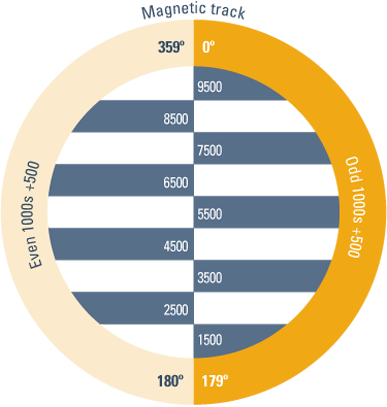
Don't forget that when cruising below 10,000 there are "air tunnels" 1000' thick that you have to fly within.
[TABLE]
[TR]
[TH]Magnetic tracks[/TH][TH]From 000° through East to 179°[/TH][TH]From 180° through West to 359°[/TH]
[/TR]
[TR]
[TD]Cruising altitudes (Area QNH)[/TD][TD]1500
3500
5500
7500
9500[/TD]
[TD]2500
4500
6500
8500[/TD]
[TD][/TD]
[TD][/TD]
[/TR]
[/TABLE]
-
2
-
-
6 hours and 24 mins of storm-watching and plane-spotting??
It was too wet to spend the afternoon watching paint dry.
-
 1
1
-
1
-
-
Personally I think Commercial advertisers should incur a charge for their Ads. After all they are in business
That's not an unfair approach to take.
-
2
-
-
Apparently with a vengeance!
-
I don't use windows.
I imagine that any operating system would have a search function.
-
I did a quick search but couldn't find it.
Where did you file it? If it's on your hard drive
- Open File Explorer, which is the icon on your Task Bar that looks like a yellow manila folder in a blue holder.
- Find the "This PC" icon on the left side Nav bar and click on it.
- Find the "Search This PC" dialog box at the upper right side of the screen.
- Enter this: *.xls and click the magnifying glass.
The computer will search for all the Excel files on its hard drive, and list them so you should be able to find the flight planning one.
-
1
- Open File Explorer, which is the icon on your Task Bar that looks like a yellow manila folder in a blue holder.
-
It's not a simple matter of taking an incandescent bulb out and replacing it with an LED. The first thing you need to check is if the LED light assembly will fit into your existing landing light assembly. Look at the many shapes of LED assemblies at the start of this video:
Also there are a lot of different methods of positioning the LED in the light stalk. There's a lot of hype and false advertising in the LED headlight market. The mob that made that video seem to be presenting the information honestly.Just another question. How long are your landing lights turned on for? If they are only used during take-off and landing, that's only a few minutes at most. The aircraft manufacturer designed the electrical system to cope with the high drain a 150W spotlight would cause. Sometimes the correct answer to a perceived problem is to leave well-enough alone.


Another Jab down 29 Feb 2020.
in Aircraft Incidents and Accidents
Posted