


Rapture
-
Posts
62 -
Joined
-
Last visited
-
Days Won
8
Content Type
Profiles
Forums
Gallery
Downloads
Blogs
Events
Store
Aircraft
Resources
Tutorials
Articles
Classifieds
Movies
Books
Community Map
Quizzes
Videos Directory
Everything posted by Rapture
-

Jabiru J160c - Are there any gathering dust?
Rapture replied to Rapture's topic in AUS/NZ General Discussion
Hi Blue, Do you know what model Rotax he has in the J230? It’d probably be a bit lethargic with a 912, so I’m guessing the 914 or 915. If anyone knows the owner of the J230 with Rotax, could you possibly pm me their name or contact details? -
Jabiru J160c - Are there any gathering dust?
Rapture replied to Rapture's topic in AUS/NZ General Discussion
Thanks Skippy. I’ll give them a call. -
Jabiru J160c - Are there any gathering dust?
Rapture replied to Rapture's topic in AUS/NZ General Discussion
Hi JabWW, Someone on the Zenith forums has done an accurate weigh of a Rotax 912ULS with accessories and fluids and achieved the following figures. The 100hp Zonsen CA500 will be essentially identical. Components Weight, lb Engine mount 12.2 Exhaust, muffler 6.2 Exhaust, pipes 3.8 Radiator 2.4 Heater hose, throttle cable, etc. 4.8 Mounting hardware, oil cooler and tank, water cooling components, air filter, miscellaneous parts 19 Total parts 48.4 Oil Engine 0.8 gal 5.44 Oil tank 0.8 gal 5.44 Oil radiator, hoses 0.3 quarts (assumption) 0.51 Total oil 11.39 Coolant Cylinder heads, water pump, expansion tanks, coolant hose. 1.5 liters / 0.4 gallons as per Rotax installation manual. 3.3 Total coolant 3.3 Engine, dry 131.6 Total fwf, minus cowling 194.69 The prop that we will trial for the J160 conversion is the E-prop with its associated spinner which is likely to save a little weight over the Jabiru prop. The J160c owners that have done the Rotax conversion have needed a new cowl, but the weight would likely be similar to the original Jab cowl. They have all done the necessary W&B calculations that have been resolved with ballast. How much ballast I don’t know at the moment. We will likely use the same team that has already done a Rotax conversion and have the knowledge of what will be involved. An EFIS is not required but an Engine Indication System such as the GRT EIS would be useful to monitor engine parameters. -
Hi folks, Does anyone have, or know of someone who has an airworthy J160c that is not flying, possibly due to engine issues or simply languishing in a hangar somewhere, not being used? We are looking into installing a 100/110hp Zonsen engine into a J160c under the provisions of MARAP, and then potentially offering conversions to J160c owners to the more powerful engines. Under the provisions of MARAP, the J160c would still be eligible to undertake training school activities. The folks with the 100hp Rotax 912 conversions have all been happy with that conversion from both the performance and reliability perspectives. The Zonsen engine (Rotax lookalike) is relatively new but there are several in Europe that have over 500 hours and have performed reliably. Anyway, if you have or know of a J160c languishing away that we could potentially breathe new life into with a new engine and an EFIS display, please pm me. Another option is installing the 145hp (137hp max continuous) turbocharged Zonsen into a J230 or J430. At 10,000’ with the IAS limit for rough air (117kias), that would represent a cruise speed in rough air of 135ktas. The still air cruise speed would be higher. That level of performance would make the Jab230/430 a more serious cross country performer. Takeoff and climb would also be better than with the 120hp Jab3300. Anyway, if any of this discussion piques your interest, reach out to me and let’s discuss. Thanks. Dave
-
There has been discussion on this forum previously about repowering the Jabiru airframe with Rotax engines. The general consensus is that the Jabiru is an excellent airframe. However, some owners or potential owners have reservations about Jabiru engines but support the reliability of Rotax engines. Indeed, several members of the forum have already repowered their J160c or J230/J430 with the Rotax 912/914 engines. The reports on this forum from the owners of these Rotax powered Jabirus indicate that the conversions have been a success and the owners have been happy with their decisions to repower their airframes. Performance of the aircraft appears to be similar or better than the when fitted with the Jabiru engine. As many of you will be aware, the Zonsen Aero engine has striking similarities to the equivalent Rotax engine, but has not yet had enough market penetration to build up any sort of reputation for either reliability or support. While over 400 predominantly 100hp Zonsen engines have been sold into Europe, it is still a relatively new product in the US and Australia. Zonsen offers products equivalent to the Rotax range, so 80/100/115/145hp, both carbureted and fuel injected/turbocharged. Zonsen also has their own 109hp engine that fits between the Rotax 912 and 914 models. Enquiries already made to Rapture Aviation about the Zonsen range of engines indicates that there is interest in putting Zonsen engines into Jabiru airframes as the Zonsen engine will offer a savings over the equivalent Rotax product, albeit without the proven track record of Rotax. This thread is really a bit of a poll to determine what the preferred powerplant would be for the respective Jabiru models, if an owner were to consider a Zonsen engine to replace their Jabiru engine. The aircraft models that I seek opinions on are: J160c J170 J230 J430 and the engine options would be: 80hp carbureted 100hp carbureted or fuel injected (FI) 109hp carbureted or FI 115hp turbocharged 145hp carbureted and turbocharged 145hp FI and turbocharged For those that own a Jabiru or are considering owning one, I’d appreciate your opinion on which powerplant would be the best suited or most attractive option for your airframe and if possible, why that would be your engine of choice. One of the benefits that I see in a Zonsen retrofit for the J230/J430 aircraft is that when fitted with the 145hp turbocharged engine, there is not only 25hp more for takeoff, there is also 137hp cruise power available at 10,000’, 17hp more that the Jab3300 can make at sea level and full power. At the rough air limiting indicated airspeed of 112 knots at 10,000’, that equates to a 130ktas cruise for the aircraft. In still air, a 140ktas cruise speed at 10,000’ could potentially be comfortably achieved. With the FI engine, there is no carburetor heat needed and with the liquid cooling, there are no shock cooling concerns to think about. This sort of performance for a J230/J430 would help make it a better cross country aircraft. Handing over to the viewers for your feedback and opinions.
-
- 1
-

-
Zonsen Aero Engines - Rapture Aviation (Adelaide)
Rapture replied to Rapture's topic in AUS/NZ General Discussion
We have our first engine about to be shipped from the factory and delivery is anticipated late December/early January. If anyone is in the market for a new Rotax 912UL or 912ULS and fancies additional hp, this 109hp Zonsen CA510 engine will be available for sale. The final price will be advised once it has been delivered to our facility in Adelaide, but you could expect a saving over the lower powered 912ULS. If you might be interested in this engine, please pm me or make an enquiry through Rapture's website enquiry form. If you have a neat aircraft that would be a good showcase for the engine, we will consider sweetening the deal if you display your aircraft in the Rapture display at Ausfly 2025 (14/15 March at Wentworth) and possibly also at Avalon 2025 (25-30 March). If a customer doesn't take it, it will be going straight into one of our company aircraft that we can demonstrate. Cheers, Dave -
Zonsen Aero Engines - Rapture Aviation (Adelaide)
Rapture replied to Rapture's topic in AUS/NZ General Discussion
REQUEST TO THREAD PARTICIPANTS! Could we please keep this thread on topic? The quality of Chinese products in general, whether good or bad bear no relationship to the quality of Zonsen engines. Please could we have no further mention about Chinese products in general. This thread is specifically about the Zonsen Aero engines. If you have first hand knowledge about these engines then please contribute. If you have a direct statement from someone that has first hand knowledge or experience with these engines then please contribute. Please, no politics and no bashing of other thread participants. If someone is out of order, I will ask the Admins to address it, if they haven’t already picked it up. I have counted over 30 posts in this thread that have no relevance to Zonsen engines. As I have said before, we want to make this thread one where folks can go to find useful information. Off topic chats are not useful and are an unwanted distraction. Let’s try and build this thread as a receptacle for direct knowledge about the Zonsen Aero engines. Even as the distributor, I don’t care whether the feedback is good or bad about the engines, a lot can be learned and addressed from folks problems with a product or product support that can go towards addressing the issues to make a better product, with better product support. SO PLEASE, CAN WE STOP WITH THE OFF TOPIC DISCUSSIONS AND IRRELEVANT POSTS? Thanks, Dave- 231 replies
-
- 12
-

-
-

-
Zonsen Aero Engines - Rapture Aviation (Adelaide)
Rapture replied to Rapture's topic in AUS/NZ General Discussion
We are currently obtaining a full spare parts list with prices from Zonsen. I’ll find out and PM you. -
Zonsen Aero Engines - Rapture Aviation (Adelaide)
Rapture replied to Rapture's topic in AUS/NZ General Discussion
Rapture Aviation (me and my partner) is the Australian dealer for Zonsen. I think Skippy is addressing his enquiry to me. -
Zonsen Aero Engines - Rapture Aviation (Adelaide)
Rapture replied to Rapture's topic in AUS/NZ General Discussion
Guys, I’d also beg you to refrain from off-topic discussions on this thread. I’m hoping that it can build to a useful and informative thread where folks can come to learn about these engines and our aircraft where the information, either good or bad can be found without having to troll through irrelevant comments. Thanks. -
Zonsen Aero Engines - Rapture Aviation (Adelaide)
Rapture replied to Rapture's topic in AUS/NZ General Discussion
Thanks Nev. I have been advised by the Zonsen rep previously that their parts will fit the equivalent Rotax engine so they can be considered an aftermarket part for the Rotax engine. I will get written confirmation from Zonsen on this matter. I’ll post their response once I have it. If the information is correct and you need any parts such as rubbers, please send a message through the contact form on our website listing the Rotax part numbers and we will seek the costing and delivery time for the equivalent Rotax part. -
Zonsen Aero Engines - Rapture Aviation (Adelaide)
Rapture replied to Rapture's topic in AUS/NZ General Discussion
That is for sure! -
Zonsen Aero Engines - Rapture Aviation (Adelaide)
Rapture replied to Rapture's topic in AUS/NZ General Discussion
On the contrary, and I have this directly from the former CEO of Insitu, the largest drone manufacturer in the world, their biggest problem was the reliability of the powerplants in their drones. They have a $1m+ drone powered by a $50k engine. They needed the drones to be in the air continuously over the battlefields and any engine failure in ostensibly a cheap engine results in a loss of a very expensive drone and the loss of capability until another could get on station. Rotax pulled out of at least one drone market (the Bayraktar TB2 from Turkey, a big seller after the Ukraine conflict) to be replaced by someone. So someone with a Rotax type engine is now filling that space. Hours will be built rapidly and reliability will be put to the test for whatever engine this Rotax replacement might be… -
Zonsen Aero Engines - Rapture Aviation (Adelaide)
Rapture replied to Rapture's topic in AUS/NZ General Discussion
Hopefully now corrected thanks Ian. Please PM me if there is anything else I need to do. -
Zonsen Aero Engines - Rapture Aviation (Adelaide)
Rapture replied to Rapture's topic in AUS/NZ General Discussion
My sincere apologies Ian. I didn’t intend to break any rules. Please let me address it as you have suggested. Please PM me to discuss if I haven’t addressed it in what you consider to be a fair manner. I’d like you on-side, not off-side! -
Zonsen Aero Engines - Rapture Aviation (Adelaide)
Rapture replied to Rapture's topic in AUS/NZ General Discussion
There are several good videos that have been put out by the South African distributor that explain the product range and provide some more details about the engines. -
Zonsen Aero Engines - Rapture Aviation (Adelaide)
Rapture replied to Rapture's topic in AUS/NZ General Discussion
For clarity and I thought it was clear in my statement, Zonsen confirmed that the engine would physically fit on the equivalent Rotax engine mounts. I made no reference to the legality of replacing a Rotax with a Zonsen. The aircraft owner will need to ascertain that element of a potential engine swap/replacement/installation. That said, we will have no problem expressing an opinion about whether the Zonsen can be legally installed in the customers experimental/LSA/95.55 etc. That is a fairly straightforward question with back and white answers thanks to the regulatory framework. -
Zonsen Aero Engines - Rapture Aviation (Adelaide)
Rapture replied to Rapture's topic in AUS/NZ General Discussion
I have confirmed that the TBO is 2,000 hours/15 calendar years, the same as Rotax. Also, I've had a few enquiries already about it being a direct drop-in replacement for the equivalent Rotax and the answer from Zonsen is yes, it will drop onto the same mounting frame as the Rotax. -
Zonsen Aero Engines - Rapture Aviation (Adelaide)
Rapture replied to Rapture's topic in AUS/NZ General Discussion
All the above points and opinions have been noted. They are no different from what we (Rapture Aviation) elocuted to the Zonsen team throughout our negotiations with them for the distributorship. Zonsen are intimately aware of all these issues as well because they introduced their first aero engine product into Europe in 2019 and expanded their worldwide markets significantly in 2022. They have seen first-hand how difficult it is to break into new markets when coming up against the likes of Rotax and their embedded solid reputation. However, Zonsen is starting to make inroads as more engines get into aircraft and reliability and support are put to the test. The number of engines is still low, as are the hours, but they are building all the time. One element I discussed with Zonsen when I visited their factory was around warranty claims. There have been very few and no significant claims that I was advised of. What we intend to do is to absolutely cane a couple of engines (as suggested above, the likely 2 most desirable models) here in Australia to do our own in-the-field testing to support that which has been done at the factory and by other dealers. Of course, we will provide feedback on that to the manufacturer to assist them with product improvement which from my interaction with them is something that is important to them. For those that reach out to Rapture, we may well need to seek the response to some questions from the manufacturer as we do not have all the answers. This knowledge will come through experience with the product. We will certainly do our best at our end from the product support perspective. One question from an earlier post was about prices. With our first engine currently being delivered, we need to be absolutely certain about importation costs before we will finalise the price point and publish prices. Yes, the prices will be better than the equivalent Rotax but how much better will be determined shortly. If you might be interested to consider a Zonsen engine, please visit our website (www.raptureaviation.com) and make an enquiry through our contact form. -
Zonsen Aero Engines - Rapture Aviation (Adelaide)
Rapture replied to Rapture's topic in AUS/NZ General Discussion
I will need to check on this. Thanks to your query, I can suggest to Zonsen that they include that spec in their literature, if there is such a limitation. -
Zonsen Aero Engines - Rapture Aviation (Adelaide)
Rapture replied to Rapture's topic in AUS/NZ General Discussion
As a distributor trying to break a new product into a market where quality and reliability (read safety) are paramount, this is what we consider to be one of the critical elements of the “buy” decision for a potential customer. Until a product has established a reputation, either good or bad, any buyer of a product is taking a gamble and there are not too many aircraft owners that will be prepared to take a gamble. With a new unproven product, really the only way to sway buyers towards taking the risk in relation to reliability and product support is through offering a cost saving over the competition. But what is the quantum of the cost saving needed to tempt the buyer away from the tried, tested and proven product? Even in China, the cost base is at a defined level that will drive where the manufacturer needs to set their price point. These engines are slowly filtering out into the aviation market. Hours are starting to be built on them but it will likely still be a few years away before we have hard data on the reliability and product support elements of the engines. We anticipate a few lean years of breaking into the Australian market but maybe, just maybe we might end up with a product line that reduces the cost of getting our aircraft flying when compared to a Rotax, but can offer a reliable and well supported alternative. Let’s check back in 2 years time and see how things have panned out for Zonsen engines in Australia. We are sincerely hoping that the presence of these engines is a positive one in Australia. -
Zonsen Aero Engines - Rapture Aviation (Adelaide)
Rapture replied to Rapture's topic in AUS/NZ General Discussion
Thanks FB. It is going to be very interesting to see how the market in Australia reacts to these engines. Only time will tell whether these engines can establish and maintain a solid reputation. Product reliability, product support and affordability will be key to any acceptance by a very critical consumer base here. I visited the factory in Chongqing, China a short while back. Zonsen has just opened their new aviation engine facility there. It was very impressive. The size of it alone was mind blowing. The very professional entrance hallway, then their corporate showroom with the history of the company, their progress over the years, their current business partners and examples of all their engines was very well displayed. I then went out back to their assembly facility. It was pristine, their technicians all professionally attired. I could have eaten off the floor it was so clean. Their warehouse was huge and automated with robots. There were shelves all the way to the very high ceiling. When parts were needed, the automated lift went down the appropriate corridor, stopped at the appropriate spot then took the container down and to the site that needed the part, then took the container back and stored it. The dispatch area had a bunch of crated engines ready to be shipped. The production line was all very neat and orderly. There was a significant quality assurance section, doing QA inspections of parts and engines. Out the back were several Dynos where their engines undergo extensive testing. The staff were all very friendly. I left with a positive feeling about their operation. I am sincerely hoping that their products and product support will ensure that there is an alternative to Rotax who do produce a great little engine. Our first engine will be delivered in December. We are looking forward to checking it out, getting it installed in an aircraft, and flying it. Fun times ahead! -
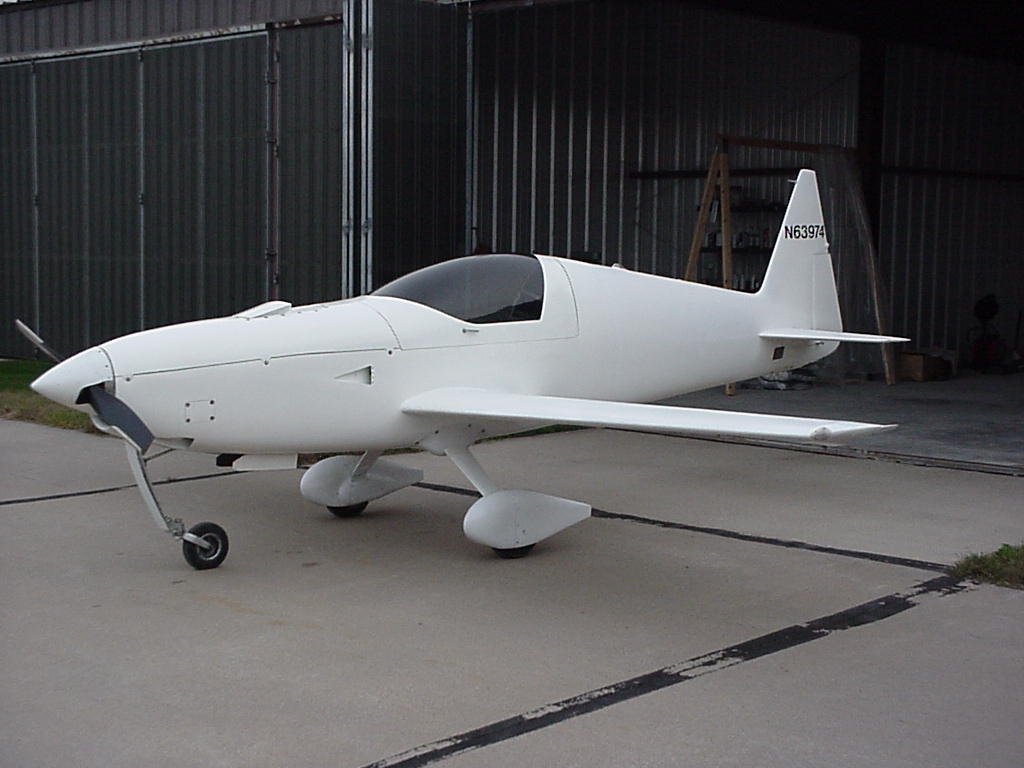
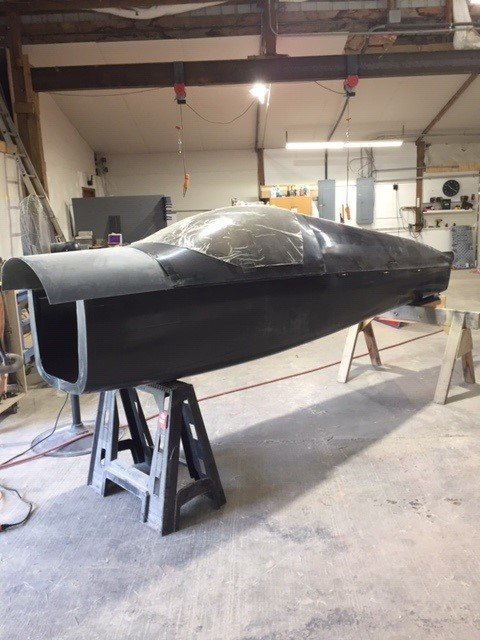
Hi Everyone, For the information of all recreational flyers in Australia, Rapture Aviation of Adelaide has been appointed as the sole distributor in Australia for the full range of Zonsen Aero engines. For those that are not familiar with Zonsen Aero, they have a range of engines starting at a 12hp two stroke engine for powered parachutes and the like, through to their most powerful engine which is a 145hp fuel-injected turbocharged four stroke engine. Their 80+hp range consists of the following models: 80hp CA300 (Equivalent to the Rotax 912UL) 100hp CA500 (Equivalent to the Rotax 912ULS) 110hp CA510 (between the 912ULS and the 914) 110hp CA510i - a fuel injected version of the CA510 115hp CA520T (Equivalent to the Rotax 914UL) 115hp CA520Ti - a fuel injected version of the CA520T 145hp CA550T - a carbureted turbocharged engine 145hp CA550Ti - a fuel injected version of the CA550T (Equivalent to the Rotax 915iS) Rapture Aviation has a website at https://raptureaviation.com/ and a Facebook page at Facebook where more information can be found about the engines. Rapture Aviation is also developing the Rapture Bug single seat high performance kit aircraft. It is a modern design with its roots in the Lightning Bug kit aircraft that was produced in the early 1990's. Using updated materials and fabrication techniques, the Rapture Bug is intended to offer the same or better performance than the original Lightning Bug but offer a lot more cockpit space for taller/larger pilots, a faster Vne, and much simplified construction to get it flying sooner. At present, the new all-carbon fuselage is completed, and the new 2-piece all-carbon wings are under construction, with a target completion date for the wings of the end of the year. We hope to have the all-new, all-carbon Bug flying mid next year fitted with the 145hp Zonsen CA550Ti. This engine will offer a cruise power of around 130hp at 10,000' thanks to its turbocharging. This power setting should offer a cruise TAS of around 220ktas. Pulling the power back to a more economical power setting is projected to offer an economical cruise of 180ktas burning around 20 litres per hour. For those not familiar with the Bug, here is a photo of an original Bug, as well as one of our new fuselage taken early in its construction.

-
-
Not a dumb question at all. With our consideration being given to the 66 sq.ft. wing for the Rapture Bug, we are considering the same wing for a tandem Bug.

until