

Ian
-
Posts
519 -
Joined
-
Last visited
-
Days Won
11
Content Type
Profiles
Forums
Gallery
Downloads
Blogs
Events
Store
Aircraft
Resources
Tutorials
Articles
Classifieds
Movies
Books
Community Map
Quizzes
Videos Directory
Everything posted by Ian
-
Recreational aircraft landing fees - feedback needed please.
Ian replied to waraton's topic in Aircraft General Discussion
For a really GA aviation friendly airport look to Christmas Island. In their wisdom the Department of Infrastructure, Transport, Regional Development and Communications decided that $300 per movement was a reasonable fee for all planes under 20T When questioned about this they stated that these fees were equivalent with other airports such as Kalgoolie, Geraldton, Learmonth & Port Hedland. I pointed out that their charges were at lead 800% higher than their "Similar Airports" and suggested that they might consider it in their next review of fees and charges. While they are meant to conduct regular reviews they didn't actually. A 750kg single engine piston plane landing at Kalgoolie would be charge a landing fee of $0.00 A 1500kg twin engine piston plane landing at Kalgoolie would be charge a landing fee of $19.75 A 750kg single engine piston plane landing at Geraldton would be charge a landing fee of $0.00 A 1500kg twin engine piston plane landing at Geraldton would be charge a landing fee of $25.50 A 750kg single engine piston plane landing at Learmonth would be charge a landing fee of $7.50 A 1500kg twin engine piston plane landing at Learmonth would be charge a landing fee of $35.47 A 750kg single engine piston plane landing at Port Hedland would be charge a landing fee of $17.95 A 1500kg twin engine piston plane landing at Port Hedland would be charge a landing fee of $35.89 A 750kg single engine piston plane landing at Christmas Island would be charge a landing fee of $300.00 A 1500kg twin engine piston plane landing at Christmas Island would be charge a landing fee of $300.00 Landing at Australia's busiest Airport which is considered expensive is would incur the following costs. A 750kg single engine piston plane landing at Sydney's Kingford Smith Airport would be charge a landing fee of $60.00 A 1500kg twin engine piston plane landing at Sydney's Kingford Smith Airport would be charge a landing fee of $60.00 -
PPL path- USA vs Aus, RAAus first, & what not to do
Ian replied to Clark01's topic in Student Pilot & Further Learning
I can't comment on the average age of the GA training fleet in Australia with any degree of rigour, however the average age of the GA fleet in Australia is 40 years. Guys this is average age, so for every new plane there's an 80 year old one. A significant percentage of these planes are used for training purposes so I find it very unlikely that the GA training fleet is anywhere near the 5 years figure. You may be able to cherry pick an individual flying school which meets those figure but only by excluding complex training requirements like twin engines etc. Also the average aircraft age has been increasing for a number of years, so the situation is getting worse. The average age of the regional turboprop fleet is over 23 years. Yes the average age puts them into the previous century. From an engineering perspective the situation is even worse, the technologies which can make flying safer by relieving pilot workload are missing in action even on new planes. For example lets choose a situation which led to an accident 20 years ago. From the ATSB reports a mechanical failure due to leaded fuel cause detonation causing bearing failure and engine loss. The second engine was lost due to high power settings and detonation. Fast forwarding to today and the same failure modes are likely to occur for the following reasons. Leaded fuel is still in use leading to buildups and hot spots. The majority of engines in common use removed this fuel type > 40 years ago Poor engine design, fuel mixture control is still a manual process. The majority of engines in common use automated this > 20 years ago Poor engine design, Engine instrumentation is still poor due to lead in the fuel. The majority of engines in common use oxygen sensors etc. > 20 years ago Poor engine design, Detonation detection is not used. The majority of engines in common use detonation sensors etc. > 20 years ago All of the above should have been resolved 20 years ago, leaded fuel should have been phased out as it's a neurotoxin. Engine control should be automated, it not expensive as the components which do this cost less than a pack of cigarettes. For example some people will say that you can't use sensors to detect detonation in an airplane engine because they're too noisy being aircooled. However detonation can be detected electronically by running a current through the sparkplug post ignition, it's how Mazda, Saab, BMW etc detect preignition. It's an old technology and it's introduction would make the GA fleet safer. There is currently a debate about whether helicopter cylinder failures is being caused by low lead petrol in hot inland areas. This is not an issue with fuel it's an issue with defective products, poor instrumentation and controls allow the manufacturer to squirm out of the accountability issues. There are design solutions to all of these problems however there is no incentive to include them by default. Fuel injection replaced carburetors because of emissions targets, prior to this it was seen as a "premium" product which you would pay more for. Now you can't buy a carburetted car, cylinders all get an accurate amount of fuel. Compare this to the aircraft industry, you have to pay more to buy "matched injectors" if you're lucky enough to have injection in the first place. -
PPL path- USA vs Aus, RAAus first, & what not to do
Ian replied to Clark01's topic in Student Pilot & Further Learning
The advantage of the training was that with the compressed training virtually all weather types were encountered with temporal continuity, because it was done in early spring and early summer. Training was done in two stints, in September and in November. A number of different weather types were encountered ranging from Southerlies blowing in, low cloud, hot and high conditions, unstable air masses with lots of energy, very dynamic weather conditions etc. A key advantage was that the continuity allowed you to participate in predictions a number of days ahead as you tried to schedule sessions across variable weather. For example starting at 6 or 7 am flying in OK weather, then having a briefing session and the weather deteriorating to an extent where I wasn't comfortable flying. Even during circuits over the period of an hour the conditions going from good to challenging and making a risk based decision to call it a day (I could still fly however it was the trajectory that concerned me and that was a good lesson as I was briefed on this possiblity). From a business model perspective spread out lessons can make it easier for the instructing business, however this shouldn't be conflated with what is best for the student which I suspect is often the case. What is the better model for students is debatable, I think based upon my experience is that the compressed training can be significantly better both in terms of cost and experience. As stated I flew in a season with extremely variable weather, this caused some delays and days lost however it was great experience and this cost was definitely worthwhile . Compressed training in Summer with day after day of clear skies may lead to a different outcome. Similarly with different instructors there are another set of pro's and cons, when teaching/instructing a set of students over a long timeframe a lack of continuity is very apparent. Each time you change instructors there is a loss, each time there a delay of a few weeks there's a loss as they struggle to grasp where you fit in their mental model of training. Compounding this is the fact that as you spend time away from the controls is that technique atrophies as well. It well known and accepted that changing a school teacher mid stream during a course has a negative impact on students, and that some teachers are better than others. This doesn't mean that schools randomly change instructors to make up for this variation on quality so I'd take the 'multiple instructors' piece with a grain of salt. This isn't saying that there isn't value in specialist training just as there's value in a science teacher teaching science and a maths teacher teaching maths however doing your basis pilots licence you're really in primary school with a generalist instructor. Of course there may be value in spending 100 hours of instruction with multiple different instructors to average out the lack of quality with some instructors, however most people contemplating getting their license don't have the luxury of time or budget so they need to compromise. -
Recreational aircraft landing fees - feedback needed please.
Ian replied to waraton's topic in Aircraft General Discussion
In general I think that GA needs to do more PR work, look at the bikies charity rides currying public goodwill. The whole Angel flights program should be advertised more widely and activities involving the locals should occur on a regular basis. -
Recreational aircraft landing fees - feedback needed please.
Ian replied to waraton's topic in Aircraft General Discussion
One thing that hasn't been mentioned is that the Grafton Airport which is maintained by the Council is about 12km out of town so Grafton has two aviation facilities, one for commercial and the other catering to the local flying community. The fact that it is much closer to town is a significant plus. -
PPL path- USA vs Aus, RAAus first, & what not to do
Ian replied to Clark01's topic in Student Pilot & Further Learning
You can do a number of hours each day and yes your rate of learning may decline but it's not extinguished, from my perspective the decline is significantly lower than that associated with intermittent training over a longer period so from a value perspective it's significantly better. We expect school students to learn for longer periods than an hour so I don't think that there's a fundamental issue with the process. Staggering actual flying and briefings with higher and lower intensity tasks can work well. More study in the evenings, it actually helps if you're not at home. Another advantage is that when you fly you will encounter situations when you aren't at your best and have already done several hours of flight. It helps if you have been through a training situation when you are tired and someone is picking up on your faults and errors. Yes you're not at good when you're tired, what techniques help to counter this. In the military world this is a standard part of their training as they know operations can have a high tempo. Theory first is a good idea, which the practical reinforcing and broadening the theoretical base. It is a hard slog bringing back memories of some weird hybrid cramming for exams and pre-season training, but rewarding none the less as your progress is a tangible thing. -
Recreational aircraft landing fees - feedback needed please.
Ian replied to waraton's topic in Aircraft General Discussion
It seems strange that they could bill incorrectly for a flight into controlled airport with controlled airspace. Unless of course they farm the voice recordings to someone not familiar with the english language. I was interested in the solution that Caboolture were using. The issue with radio calls is that they're easy to fake or mistake. I'd like to see ADSB made mandatory for all flights and also have the Government provides an open source ADSB reference design and test compliance suite and program. This would drive the price down to a nominal cost so that the price reflects the components. However the ADSB standard is an incredibly dumb standard, signals are easily spoofed and have less security than a standard phone handset. It really does need to be fixed. -
PPL path- USA vs Aus, RAAus first, & what not to do
Ian replied to Clark01's topic in Student Pilot & Further Learning
Hi as someone who recently went down this path I'd recommend the compressed approach, especially if you have other commitments, ie work, family etc. After a few weeks of sick kids, work commitments, bad weather, instructors changing, aircraft issues you're so far behind that you're paying money just tread water. Unless you're old or have significant problems you can leave the medical until you're actually doing your in training. If you're overweight or have some other risk factors do it early. I can't comment on the US pathway however someone I used to work with went down this path and it was economical at the time and might be the way to go. I went straight to PPL in two relatively short intensive bursts space not far apart, you learn faster and build upon what you know quickly. In hindsight it would have probably been better to do it in the one run however it is quite stressful as you're never as good as you'd like to be. From a business perspective flight schools prefer the once/twice a week fliers spread over 12 months as it makes for a more predictable cash flow. If you're negotiating with a flight school ask for all the costs up front, hourly rates for training, costs of practical exams, etc. Also discuss who will be your main instructor and meet them, often you do the introductory flight with a senior person and then are handballed to a fledgling instructor or passed around between a few. As for your comments in relation to the technology, it is a bit of a farce. I suspect I was one of the last people to use a slide rule in the general education system, I came across them again learning to fly, some folk still think their whiz wheel is a good thing however that view won't be shared by anyone under 50. I'm not saying that they can't be useful however they're inaccurate, error prone and out of date and shouldn't be at the core of a flying theory course. You can't even take in a calculator that does trig let along something programmable. When I fly I have two tablets plus a phone with an electronic flight book, yes there's a risk that they may fail however it's unlikely and they're more accurate. 1950s technology is bad, the engines burn oil, you can overheat the engine, carburetors ice up etc vacuum pump fail, magnetos burn fuel inefficiently and don't advance or retard the spark, engine detonation can destroy the engine, engine don't have roller tappets. None of these things happen with automotive engines built since the late 1980s, they have fuel injection, electronic ignition, higher tolerances, better alloys, detonation detection, fully computerized engine management and the engines last longer with less care. I'd like to see all planes with ADSB out, entry into controlled airspace being managed digitally and less of a focus on certification and more focus on capability. But that being said I find that flying is an absolution joy. -
Recreational aircraft landing fees - feedback needed please.
Ian replied to waraton's topic in Aircraft General Discussion
Given the choice, and there generally is one, I will choose the place with no fees. I will specifically avoid those places with higher than average fees. I don't mind bearing some of the costs associated with running an airfield as long as they are reasonable and reflect the requirements of the aircraft involved. There are a number of caveats associate with this though. Airports tend to attract business into the community so from a business point if view they are and should be a loss leader funded by the community. Airports are public goods and service a far wider community than simply those who use it on a regular basis especially in times of duress and emergencies. All levels of Government should recognize this and contribute accordingly. If you want water bombers to be able to operate effectively when there are bushfires you need an airport, if you want mass evacuations in times of duress airports are very handy. If you want large tankers to operate you need a large airport. The requirements relating to bushfires control will continue to escalate as it's extremely unlikely that effective responses to global warming will occur until its an absolute disaster, the science is crystal clear however people stuggle to comprehend basic math and logic. The recent bushfires have just been the prelude and a distributed network of forward airstrips in fire prone area will be a key strategic asset in efforts to manage these risks. In relation to the collection of fees, if a significant proportion of the fees ie more than 5% are being siphoned off in management charges that should fixed and the parties involved should be named and shamed. If the councils involved are party to this they should also be named and shamed. Agreeing to high commission deals just because you don't directly bear the cost is simply laziness and incompetence and funneling money that should stay in your community back into the bid cities. Trying to charge for gold plated solutions is commonplace, for example when the surface is upgraded to cater for RPT, that upgrade cost shouldn't be expected to the borne by those who don't need it however these costs are typically used to justify fees. You will often seen local councils spending millions on a terminal building and then claiming this as a cost associated with running the airport when in reality it's just a vanity project. -
There's always hope 😉 Does anyone know if there has been any hangar space at Canberra airport for GA in living memory and what the going rate is? There appear to a lot of planes parked outside that I assume people would prefer to see out of the weather.
-
It might be good for CASA to have greater visibility over the operations of a smaller airstrip and the compliance burnden. They could use it as a pilot site for upcoming ideas in relation to how to do "light touch" low cost regulation.
-
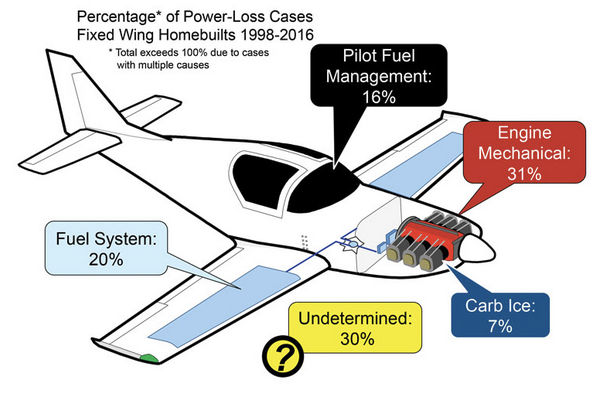
The point I was trying to make was that there are a number of aircraft which are deemed suitable to fly and train in however not all of these aircraft are equally reliable or safe. It may have been better to pick an example where there are fewer emotional attachments, however I still think that's it's good example As I stated I'd like to see the Jabiru engine series evolve into a best of breed engine. I think that its great that a small company has the engineering chutzpah to compete against the likes of Lycoming, Rotax and Continental. I'd actually like to see a graph like the one above post 2016-2021 showing the current failure rate. Anyway how this relates to the original question whether a single or a twin is a suitable for an new pilot is look at why you want a twin? If it's safety I would recommend that you do some reading along the lines of this article on twin safety
-
My understanding is that Jabirus still requires some additional procedures when training compared to other aircraft. CASA imposed these due to their perception of risk (rightly or wrongly) This is partially based upon this report which led to the following report created by Jabiru engineers where explicit design changes and changes to the maintenance procedures were made to make CASA happy. It would appear that there was a real issue associated with the through bolts. For instance my understanding is that through bolts are now replaced at 1000 hours and recessed pistons are fitted to attempt to provide for the possibility that some power may be retained in the case of a stuck piston. The graph below is from the report. Now I'm aware that Jabiru contested a significant number of the engine findings however even with these taken into account they didn't have the best safety record. This would indicate that aircraft powered by these engines are a higher risk, not an enormously higher risk however a higher risk none the less. I'd like to see these engines evolve to become the best is class engines from a safety perspective however new designs tend to fail more than older ones. I'd also like to know the alloy used in the heads and whether this was a high temperature alloy like hiduminium
-
I understand the NIMBY perspective however this infrastructure would be an ACT Government proposal and there are no ACT voters in this area. It would be a great spot from the ACT Government's perspective. Its located in a corner of the ACT, lots of NSW voters but not ACT voters. It would also provide protection for Tharwa which without being on their doorstep and it is central to the fire danger areas. Currently if smoke were to obscure Canberra you have nowhere to go. Were the grazing interests NSW based or ACT based, I wouldn't see ACT as having much of a grazing industry?

-
Not all experimental airplanes are high performance vehicles. While of I know people who learnt to fly in their own experimental aircraft with instructors willing to teach them, the ownership requirement is a significant impediment. While there's a degree of risk involved, there's also risks involved in flying in something that was built by people who are now in their 90s. Does anyone know the average age of certified GA training aircraft used by flight schools in Australia? Jabiru airplanes have been identified as higher risk vehicles to consider training in and require special procedures however people still train in these airplanes. There are also experimental Jabirus which might provide a good training environment. Essentially it is a risk based decision, current policy precludes the experimental approach unless you are the owner. I'd like to see a policy change where if an experimental plane was available, and you believe the aircraft is sound, and can source an instructor who was willing to teach and also believes the aircraft is sound there should be no bureaucratic impediments to training in said aircraft. I'm not sure if a shared ownership approach could gets around this, ie you buy a share for $X, training in the plane and then sell your share when you complete your training. I know of numerous people who are keen to learn how to fly, however the cost barrier holds and the lack of infrastructure in the region holds them back.
-
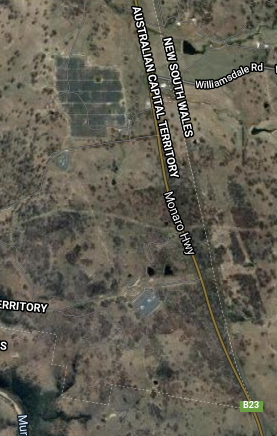
Hi All, I was reading about and wondering whatever came the of Canberra second airport proposal. There's this website and there would appear to be a reasonable market demand and the spot chosen wasn't surrounded by any ACT voters. There was also a Deloitte's study which was reasonably positive. Was it canned because they wanted to deploy a solar farm nearby and has this infrastructure made the site unsuitable? Given the recent fires and the expectations of significantly more into the future wouldn't an airstrip situated near where the fires actually occur make more sense that one to the north west of Canberra where the operation of heavily laden planes can cause incidents like this. The planes were located so far from the infrastructure they were meant to protect that it took them about 90 minutes round trip for each flight. The Williamsdale site is also very close to the angle crossing pipeline that they they use for refilling Googong Dam so it would have easy access to copious amounts of water. There's probably a larger Federal Government business case to builds and support numerous airstrips right across the fire prone areas to support continuous operations but that's probably another discussion. I noticed that Tumut airport received funding along these lines.
-
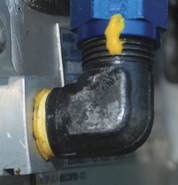
Hi Skip, The thread became confused because Nev stated that he would prefer a barbed fitting to the barbless one you were recommending. Images were shown of your recommended fitting and a fitting showing a single barbed or collered fitting. Comparing the images you showed a straight fitting and the comparision object was a single barbed. You responded effective stating that barbed connectors were marketing drivel. Right after the image of the single barbed connectors (I think that this led to the confusion as you've indicated you really dislike the multibarb type and felt the urge to make this point, we get this now 😉 Of the pictured images are you happy with the claim that the coopers filter with the barbed neck provides a better mechanical fit and greater pull off resistance than a straight connector or the type that you displayed? So in an ideal world your ideal filter would be a mesh filter with a single raised barb or collar (Given all other things are equal) The reason that I cited the Kitplanes article was simply because it was relevant to the discussion at hand and I thought that it was a reasonably balanced approach, yes there were some mentions of some brands however he also provided some good advice about making and connecting hoses. We're big kids and know that if the article mentions ponies we may choose to not buy a pony. For example it did make me think about areas where marking fittings might make sense. I was taking to someone the other day who said that on a flight after some off site maintenance they noticed that their foot was really cold and realised that fuel was coming in through a vent. It was a fuel line issue which was created while doing the other work.
-
I was hoping that you were using mogas and was going to get you to try avgas and see if the issues went away. :-( The volatile components of mogas vary somewhat and are higher than avgas. Also winter blends may contain higher proportion of volatile components compared to summer blends.
-
Hi Skip, We weren't talking about sales were were talking about design. You were of the opinion that paper filters were no good and ventured the opinion that mesh filters were the "aviation grade" ones which could be seen as a sales gimic. Nev mentioned that he wouldn't use a filter without barbs as the filter you displayed didn't have barbs. You then stated that barbs were just for a warm fuzzy feeling. Thruster88 showed a hefty turbine with an paper filter I stated that barbs and raised collar provided a mechanical advantage especially when used with a clamp. The rest is just going around in circles.
-
I think that the key point is that push/friction fittings are most suitable on vacuum lines or where some other mechanism enforces integrity. When a greater degree of assurance is required, use a raised fitting with a clamp. Most automotive fittings use some form of clamping mechanism combined with a raised fitting simply for reliability. It probably makes sense to do the same on an airplane. The article specifically states that "Not every hose offered by an aviation parts supplier will satisfy all of these criteria for any particular application. Also, your search for suitable hoses and fittings need not be restricted to aviation vendors." they're not promoting aviation parts however they are asking you to think about the compromises you make when selecting a part. The fuel system is a critical system and you may want to take some degree of additional risk mitigation compared to system which you would use to attach to a vacuum line. I am somewhat sympathetic to your view in relation to the mult-barbed fittings however where a single barb provides an area of greater diameter also allowing the attachment of a clamp its simply better from an engineering perspective. The automotive industry moved away from push on fittings without a mechanical retainer on fluid and electrical connectors decades ago.
-
Out of curiosity were you using avgas or mogas in when you were seeing the empty fuel filter. Avgas has a lower vapour pressure than mogas which may have contributed to the vapour issue. While the engine continued to run this is vapour issue is a bad thing. Most modern vehicles use submerged fuel pumps which solves the issues by creating positive pressure, only on flying dinosaurs does it remain an issue. For those interested in wikipedia has a good vapour lock article. While Lycoming has come to the mogas party in recent years issuing the following service instruction the mechanical injectors and the associated heat creates a significantly higher vapour lock risk. In tank pumps would resolve this issue and have the potential to make aircraft more reliable, especially when using non-aviation fuels.
-
I won't comment from a push fit perspective however when used with a clamp a barbed or raised fitting does provided a significant mechanical advantage and added safety, you can also buy aviation clamps with safety wire holes which should give you an extra feeling of safety if you've ever had a fuel hose come loose. The following kitplanes link also provides an opinion as to the mechanical advantage or barbed or raised fittings. It's written by an A&P mechanic, Designated Airworthiness Representative (DAR), and was a member of the EAA Homebuilt Aircraft Council so I'd rate this advice above the general run of the mill fluff.
-
2.3m sounds pretty tall. Australia's tallest person.
-
Has anyone used an electric bike/scooter or similar to get to/from the airport?
-
I actually think that there will be a resurgence in flying due to the ability to work remotely far from the office. Modern knowledge workers don't need to live in major cities and these cities are perceived as unattractive by a significant number of these workers. The attractive places to live are often poorly served by RPT however many of them have airfields in varying states of repair and it takes too long by car to get to a meeting and back. The requirement to go onsite is often just a monthly or fortnightly requirement however there are still the issues below. Planes as a package needs to get better, the fact that a homebuilt plane can be better what the market provides is a bit of a damming indictment. You can't build a car that comes close to what the market provides. Secondly costs of training needs come down significantly if you actually want people to fly, why is a driving instructor with a car $45-$75/hour and the cost of flying so much higher. However if this pans out, the majority of this new group of "aviators" will be simply commuters and may not have a passion for flying. But at the very least it could stop the atrophy which appears to be occurring at the moment with land developers buying airports. You may also be right about drones, doing most of the flying as generally they can do a better job for less, a military pilot hasn't defeated an AI in the same planes in a decade. However drones will need airfields, hangars and other infrastructure. Given the choice between $20000 of instruction and the ability to buy a self flying commuter what are most people going to choose? But that's sometime off right ;-)