


sseeker
-
Posts
612 -
Joined
-
Last visited
-
Days Won
2
Content Type
Profiles
Forums
Gallery
Downloads
Blogs
Events
Store
Aircraft
Resources
Tutorials
Articles
Classifieds
Movies
Books
Community Map
Quizzes
Videos Directory
Posts posted by sseeker
-
-
Hi Slarti,
I read that the D was the 600kg MTOW modified one on their website somewhere. One thing I've learned with Jab is to never trust their publications
 Also the J160C & D are both factory built, the J160 is the kit plane.
 -
J160D has a raised MTOW to 600kg, pretty sure.
-
Hi,
Our Jabiru is factory built and that's how the heater works.
According to the POH the carburettor heat is not filtered & the cabin heat is filtered, just thought I'd point them out so everyone's on the same page. We have a CO monitor card in the Jabiru and it's pretty out of sight (mounted on the top of the cockpit where the empty weight card, speeds etc... are placed) it's summer at the moment so the cabin heater isn't needed but winter is just around the corner and I'll be solo before then so I can see myself using the cabin heater.
Overall I'd rather be cold with a jumper in the cockpit rather than hot and muggy having to strip off my jumper. Regarding the audible CO device I've seen them before but I wonder if Clear Prop can order any in for a good price?
-
A copy of my manual (latest manual) can be found at: http://jabiru.net.au/Manuals/Pilot%20Operating%20Handbooks/J160-C_Section0-9_Rev3.pdf I'll speak with our CFI and L2 and if the manual turns out to be wrong I'll send Jabiru an email, it's just most aircraft don't have filtered carby heat and that's what the manual reflects that's why it's confusing me.
-
Hi Biggles thanks for the explanation. The reason I was arguing the point is because I'm going off what my manual says (which it appears to be wrong in this case).
I'll attach an image of my manual. I think the best thing in this case (as you suggested) would be to have a word with our L2 on how our Jab works.
-
From what I've heard the GA BAK exam has 15-30 questions, so that means you've got to learn everything in depth because 1 wrong question can drop your mark by a fair bit. I'm going to do the GA BAK exam as well in the next few weeks, I've borrowed my brothers Bob Tait VFR Day Guide (BAK & PPL) and so far I find it fairly easy to understand. I find that writing things down helps a tonne, if you don't understand something just summarise it and put it in your notebook.
Hope that helps.
-
From what I know the J430 runs on the Jabiru 3300 which I haven't heard anything bad about. I've heard nothing but good things about the Jabiru engines. I take it you know that the J430 can only be registered in GA? The J230 is the next model down and can be registered in RA-Aus or GA. Haven't built or flown one myself so can't really comment on anything else.
-
I think Google Maps/Earth has been updated since 2005 because I can't seem to find it no matter what altitude I'm at.Google Earth Community[/url] who lives just about right under the aircraft's position when Google Earth's satellite captured this snap.The Lancaster in question is the Battle of Britain Memorial Flight's "City of Lincoln." The image is at 52 20 10.87N 0 11 43.34W, or right here (Google Earth KMZ link). ® -
Hi GraemeK,
Yeah I've seen some videos on Youtube with Jabs that have vents in the windows, deffinetly something worthwhile in the summer, especially in Bindoon.
-
Yeah I guess that'll have to do. I've been up to 5000' with the vents open and they work a charm up there. 10C cooler than it is on the ground.
-
And for all of you that are lazy, I attached a screen capture
-
Hi Phil,
Thanks for sharing that info, I was considering having a go at opening it slightly to see if it'll let cool air through & luckily I didn't. When I open the side vents it usually manages to cool down my hand and not much else, I'm surprised Jabiru hasn't come up with something similar to Cessnas "Cabin Air"
-
What I don't understand is why would you do something like that? Is it a confidence thing? You've just done all that training and your instructor thinks your capable of a solo nav and you go out to a field, circle it a few times and come back. What a waste.
-
Sorry I'm lost are we talking about the same thing here? :hittinghead:
Carburettor heat isn't filtered but the cabin heat is & also the manual says the flapper valve is on the outlet side not inlet.
Really what I was trying to find out here is does the Jabiru have any other way of getting cold air from outside into the cockpit apart from opening the side vents (which are miniture on the 160 and don't cool much.)
EDIT: Ok you edited your post, no worries I'll send Jab an email. Thanks for your input. Also I have the printed copy of the 160 manual and it doesn't say anything about it being filtered under 7.12.1. My manual is from 2009.
-
A quote from the J160C pilot operating handbook,
"Air Induction System: The engine induction air normally enters through a NACA duct on the left side of the lower engine cowl. The air is then directed to a filter box where dust and other contaminants are removed by a replaceable paper filter element. On the outlet side of the filter box there is a flapper valve which allows the pilot to select normal cold induction air or hot induction air which is drawn through the muff fitted to the muffler. Hot air is not filtered - therefore care must be taken when choosing run up positions to minimise dust ingestion while carby heat is selected ON."
I was taught the same thing at school, that carburettor heat isn't filtered so care should be taken when running the engine up.
-
Hi Geoff,Andrew,I can answer the above based on the way my 230 is hooked up.The carb heat involves normal intake via the inlet on the left of the cowl, with a flap valve that redirects the intake from a bracket that is located at the rear of the muffler itself. That line is the same dia as the fresh cool air intake and the arrangement has the advantage that carb heat air is also taken in via the aircleaner. Some other aircraft take carb heat that bypasses the air filter.
This is controlled by a "Carb Heat" pull unit somewhere in the cabin.
The cabin heat comes from a separate smaller line with the inlet usually on the front of the cowl, then to a separate muff on the exhaust pipe and via a separete connection into the cabin.
This should have a "Cabin Heat" pull unit in the cabin.
Hope this helps.
Regards Geoff
Yes our carby heat bypasses the filter box. But is there a way for me to intake cold air instead of hot air like the manual says?
Thanks, I think ours has been spiked since when I try to turn it on the red flag doesn't disappear. Time for an instrument overhaul/new instrument?re ETC , some are electric and some vacuum drivenElectric uses a fair bit of power, so they have thier own isolator switch, Id guess if you had a electrical problem or needed every drop of battery power ie winter start, youd turn it offAlso gyro wears out so unless your using it you can turn it off
Regards,
Andrew
-
Hi everyone just a few questions,
Question regarding the ETC in my schools Jabiru J160C. How exactly is the ETC wired up to the aircrafts electrical system? Some aircraft have an ETC on/off switch (which ours has) and with others the turn co-ordinator (maybe it's vacuum pumped and not electrical?) comes on with the masters. Looking through the J160 electrical wiring diagram the ETC should only function when the avionics is selected on and the ETC switch is selected on, however on many occasions I have jumped into the plane and turned the masters on to deploy flaps for inspection and the ETC has started spooling up because someone left the ETC switch on from the previous flight which is pretty easy to do because the switch is so small and under the throttle.
Question regarding air induction in the J160C. Just reading through the J160C manual I noticed that the Jabiru can also intake cold air which enters through a duct on the left side of the cowling (which is deffinetly there) however it says there's a flapper valve to select either hot or cold air. Our Jabiru came with the cabin heat factory mod so the lever inside the cockpit is marked "Cabin Heat" - I've never used it but I guess if I did pull it, hot air would come out right?
is it a manual operation to change the induction from hot air from the muffler to cold air from outside? Or is it just a matter of pulling the cabin heat lever slightly so just cool air gets through? At the moment I just kick open the side vents to draw in a very very small amount of cool air (which manages to cool down my hand and nothing else )Hope I didn't complicate that. Appreciate everyones input.
Thanks,
Andrew
-
Hi,
I've heard that most GA schools give a poor conversion rate for RAA hours. Is this true?
Thanks,
Andrew
-
I don't see the problem, if you haven't got anything to hide just put the card on your windscreen. After all it's making RA-Aus better for us all by catching people who don't pay rego!
-
The card is valid for 2 years.
-
Perhaps you and your instructor are going on a quick nav just so he can demonstrate what it's like? Me and my instructor have done that but even then charts were brought up as well as GPS.
-
Few people I have spoken to have flown across Australia with their ASIC, flying into RPT aerodromes and not one time were they checked. I got my ASIC through Aviation ID Australia and it took 1 week without the security check (I'm under 18). I sent my application into CASA for an ASIC before I tried AID and it took them 4 weeks to even process my application and then they sent it back saying it wasn't filled out correctly!
RA-Aus shouldn't take that long so you should receive it soon! :thumb_up:
-
Hi Dave,
Welcome to the forums, Stanza pretty much summed that one up for you. Unfortunately if you're interested in an aerobatics rating, GA would be the way to go. Look forward to seeing some more posts from you!
Regards,
Andrew
-
Bindoon Dewars Pool Rd (the road the airfield is on) leads to Toodyay so deffinetly drop in some time!
 Also the J160C & D are both factory built, the J160 is the kit plane.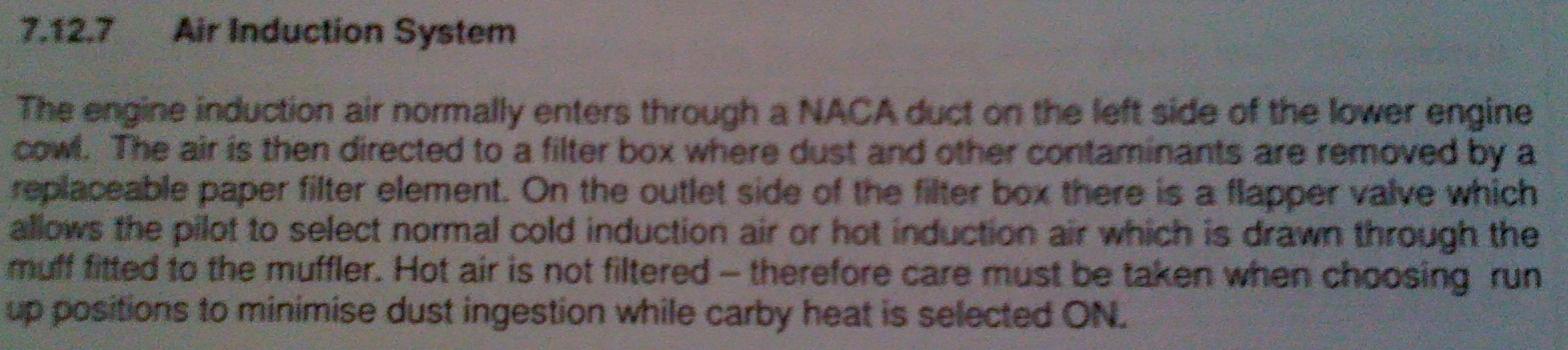

 )
)
Whats the difference?
in Jabiru
Posted
Yes slarti that's right, I've been speaking to someone over PM and they confirmed I'd accidentally read the J170 page instead of J160.