Garfly
-
Posts
3,141 -
Joined
-
Last visited
-
Days Won
74
2 Followers

Garfly's Achievements

Well-known member (3/3)
-
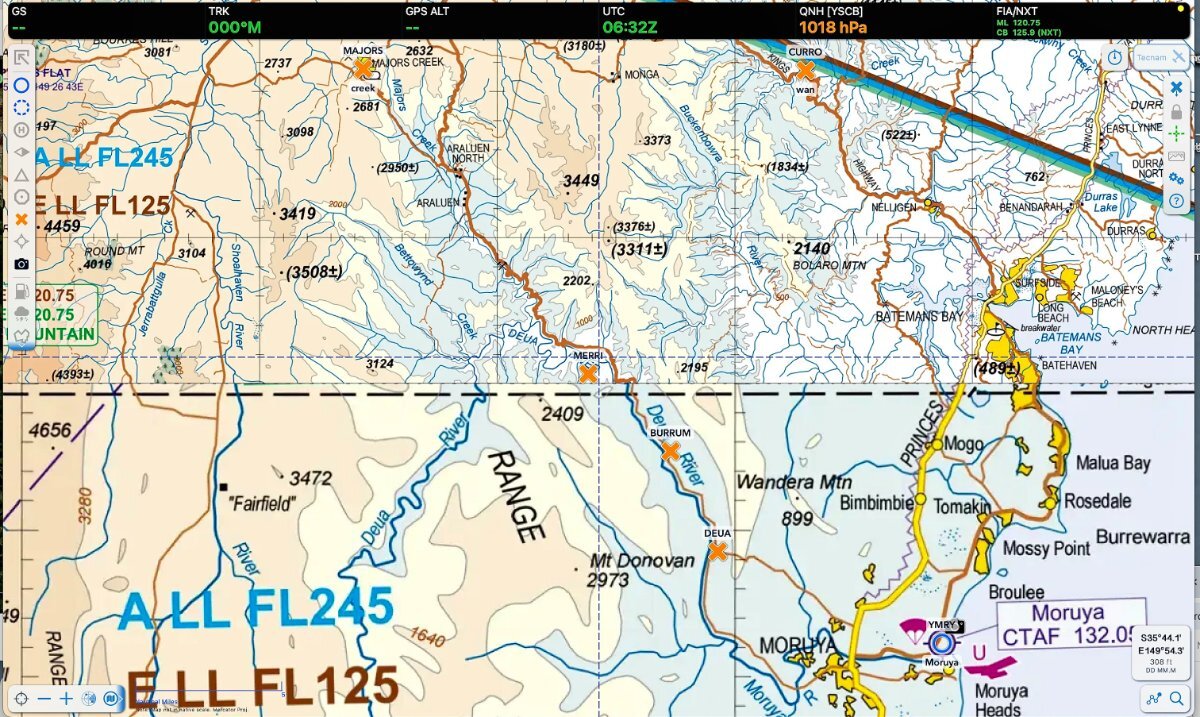
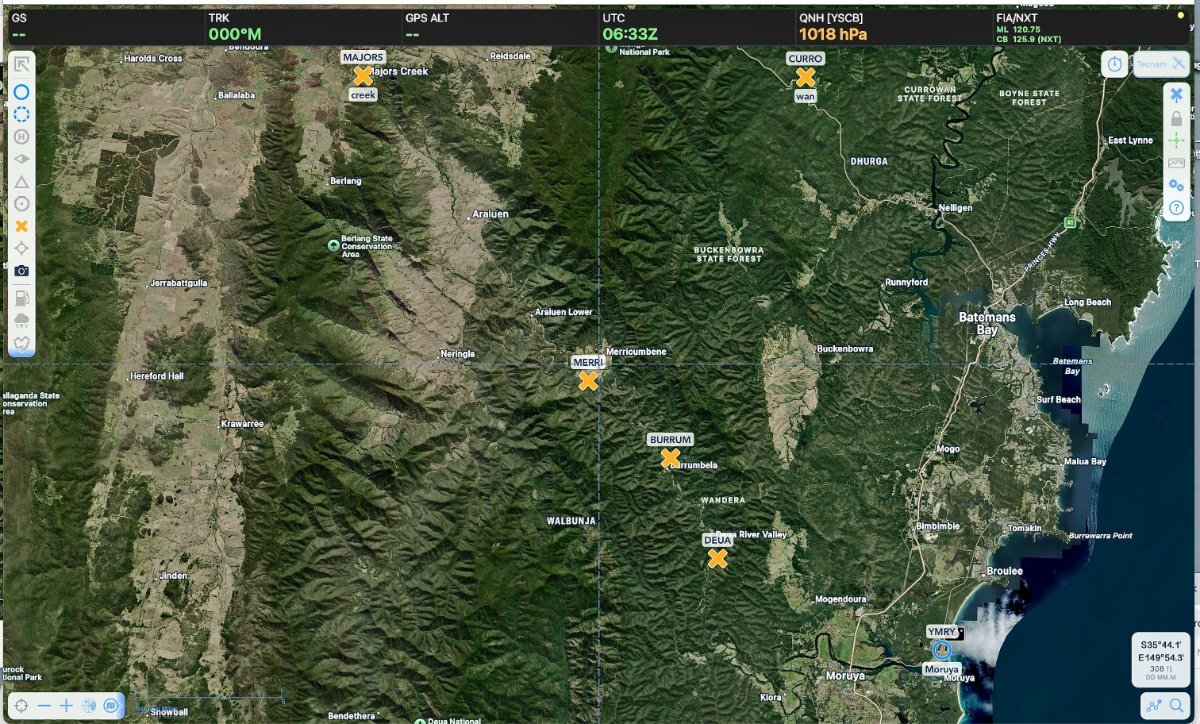
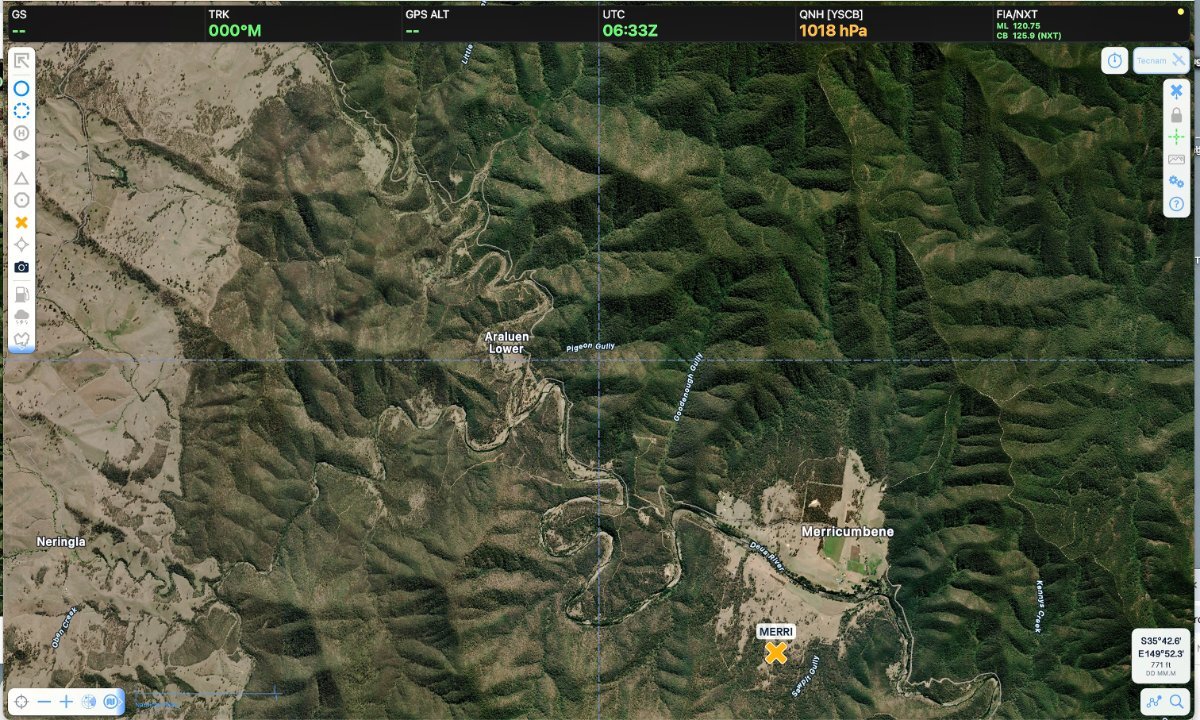
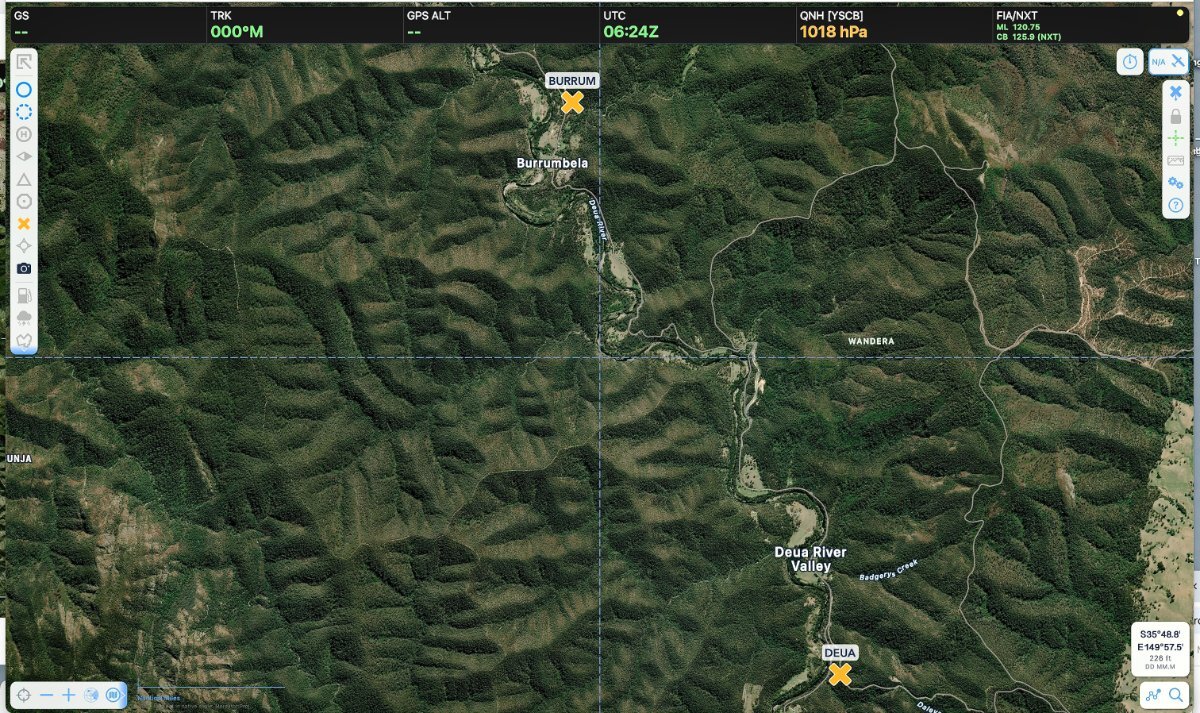
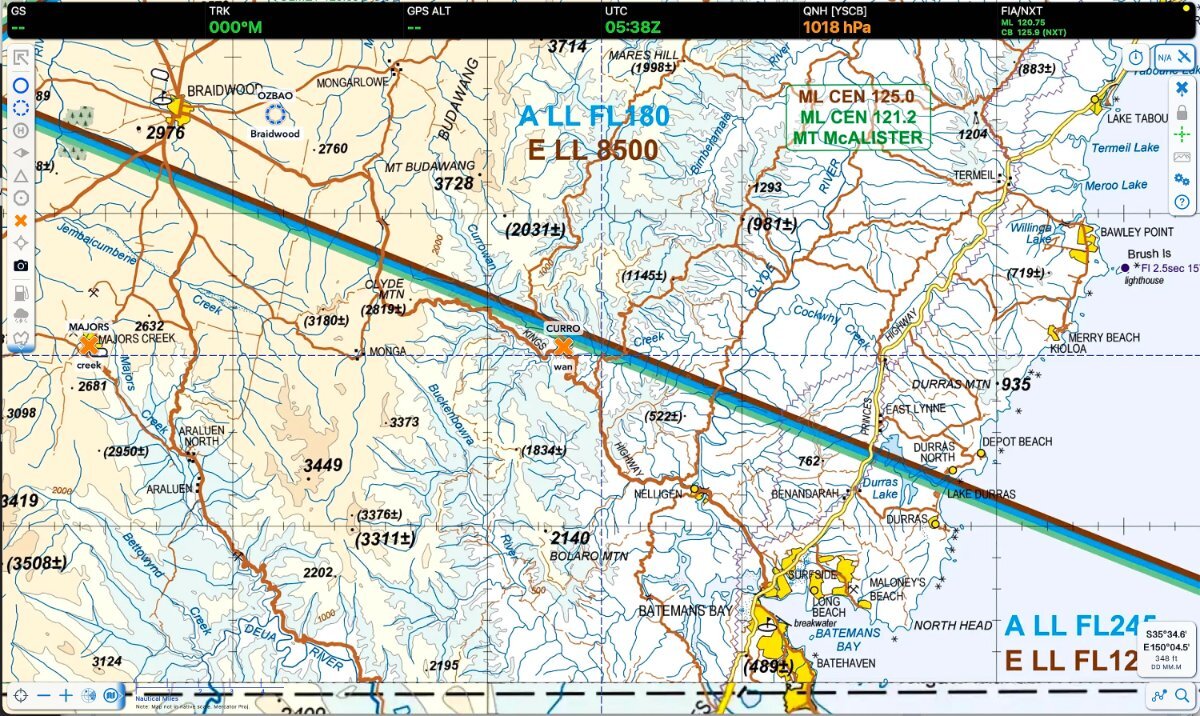
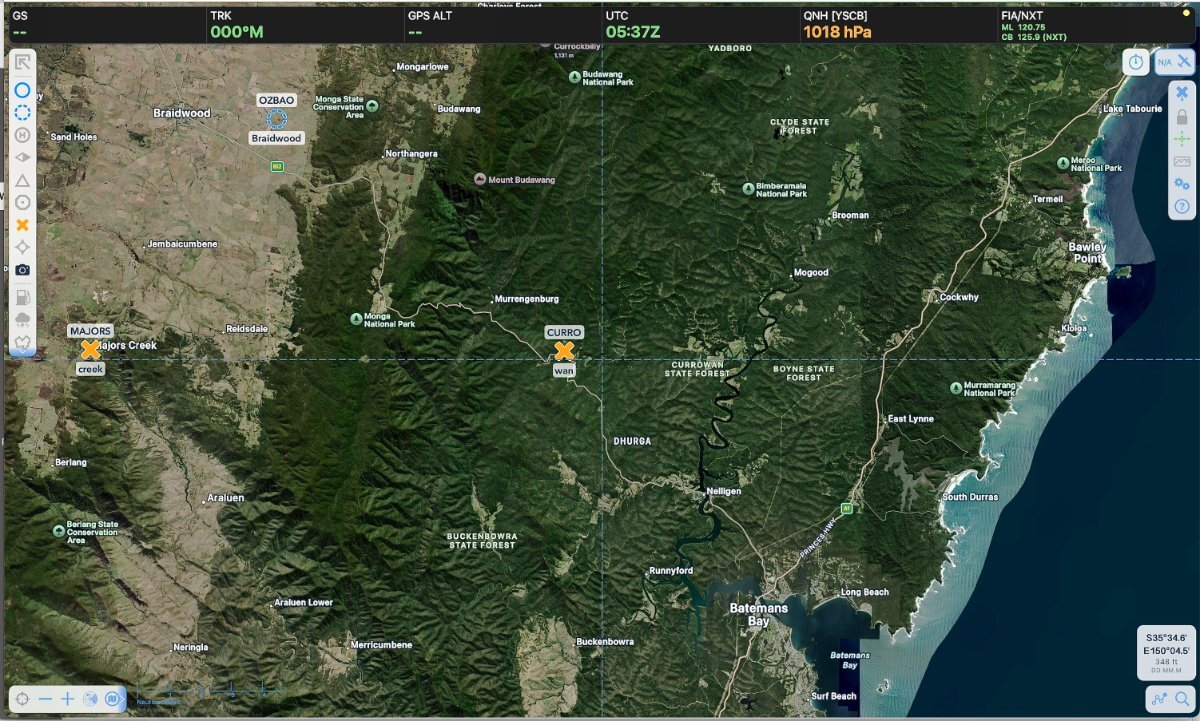
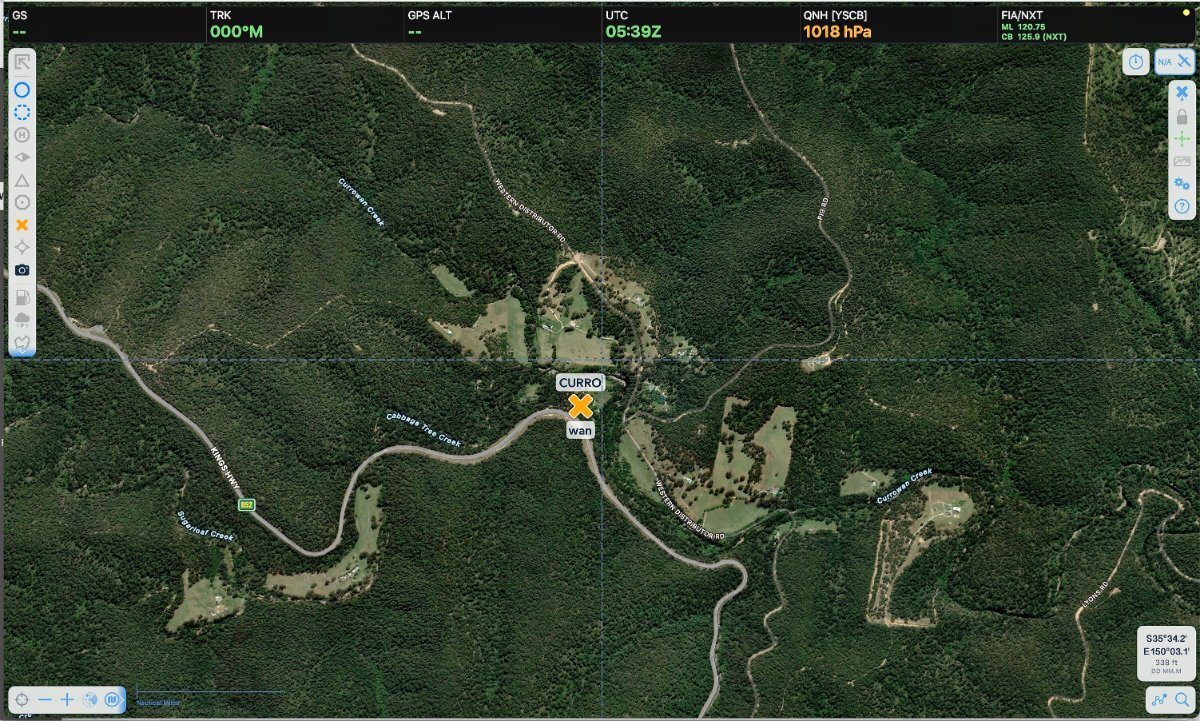
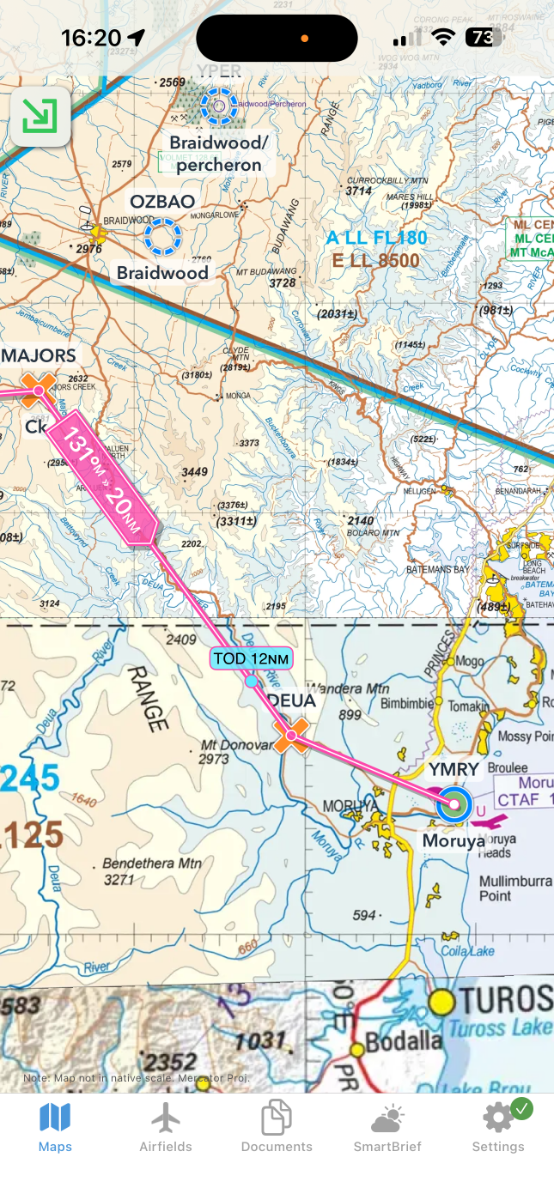
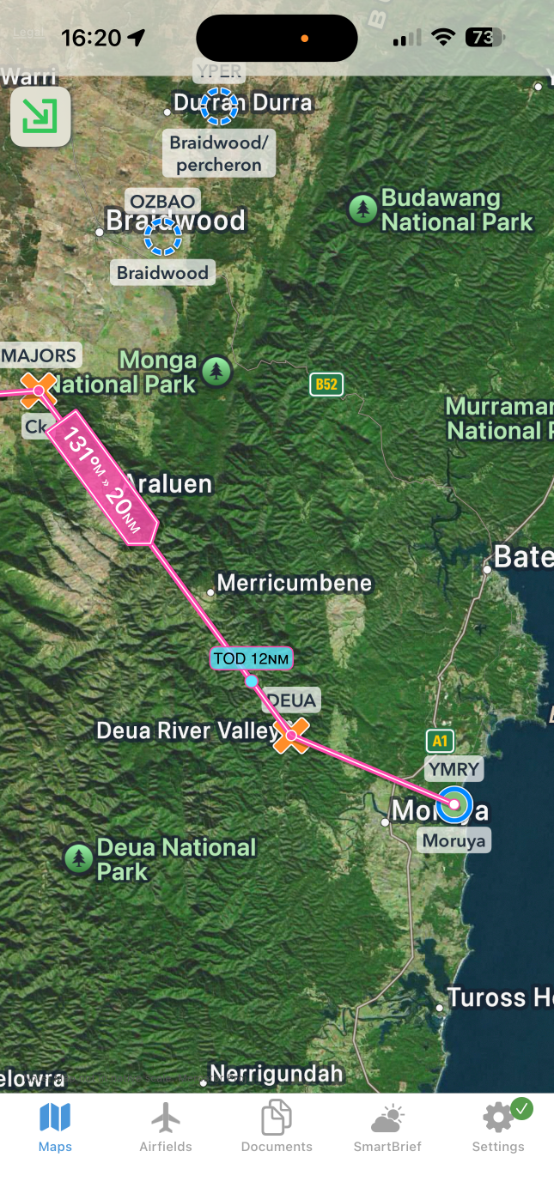
Yeah, Col, I think it's six of one and half-dozen of the other in that case. But anyway, to Moneybox's original point, it is now a lot easier to compare VNC and SAT map views while you plan a flight. I had a look at your preferred path down to the coast - going straight over the escarpment south-east of Braidwood towards Bateman's Bay before tracking south. Well the sat-view gives a very different impression than the VNC. And we know there's a lot of rugged country around those Budawangs. On the other hand, only about 7NM after leaving the safety to the tablelands - as the satellite view shows (when you pinch in) - there's a fairly landable flat area called Currowang Creek. And beyond that it's not far to the Nelligen Valley, before you hit the beaches. [Pics#1-3]. These are insights we won't get from our aviation maps. Likewise, the alternate route down the Araluen and Deau valleys - a bit to the south. [Pics#4-7] When you zoom in on sat-view you get to see that there are actually quite a few places enroute to put down in a pinch. It's not as rugged or remote as it first appears. As always, a lot depends on the weather and the more height you can get the more options you have. 1. 2. 3. 4. 5. 6. 7.

-
Fair enough, but as Thruster posted above, MOS 26.64 seems to be the only 'regulation' that applies to us (and most would see it as just common sense). That being said, with new tech 'remote' ain't what it used to be. (Though flights can and do disappear). Remote area survival equipment (MOS 26.64) An aircraft that is flying over a remote area is required to carry appropriate survival equipment for sustaining life for the area that is being overflown.
-
Oh, I understood but I'd say the added detail is not much more persuasive. But let it pass. It ain't important. We're all in furious agreement that having enough water and the means to yell for help is a bloody good idea (like motherhood and apple meat pie).
-
'There's always one' indeed, but your lurid anecdotes, alone, do not convincing arguments make; nor even seem to try. BTW, for the price of renting $10,000 worth of HF gear, you could treat yourself to a new telephone. It's portable, provides SOS sat-comms from anywhere and will even run an EFB app to keep you in a safe place to start with.
-
Yeah, in OzRunways/iOS (etc. ?) you can switch from regular aviation charts to Apple sat maps whenever you want an idea of the actual terrain below. Although you need an internet connection for that. CLICK PICS FOR FULL SIZE:
-
Lucky that the ERSA, charts and docs weigh-in at zero as electrons.
-
Security screening at Burnie Airport could drive airlines away, airport boss warns - ABC News WWW.ABC.NET.AU Burnie Airport has been told it will need to introduce security screening, but the airport's director says the cost of doing so will make some services commercially unviable and threaten the airport.
-
I may be missing something but I do doubt that this apparent contradiction is a case of rules being bent. Actually, I can't see where in SECTION 12.6 it actually says that "on condition" - as defined therein - is not available to Training ops just as it is for private users. Yes, the concession is generally unavailable where LSA aircraft are involved, and/or where "the manufacturer specifically excludes it." And the manual does emphasise that an aircraft that's been used in private ops with an "on condition" engine must not later be used for Hire/Training until that engine is swapped-out for new. Which suggests to me that if that's not the case then it is acceptable. Though if my reading is correct, I'm left wondering why more flying schools don't take advantage of (properly maintained) "on condition" engines (as is commonly the case in GA). In some cases it may be to do with the LSA exception or it might come down just to economic and/or safety-culture related business decisions. But I reckon the heart of the confusion involves a grey area related to Rotax: whether "the manufacturer specifically excludes it" at least in so many words. When all's said and done, though, it's a grey area that helps keep recreational aviating affordable (just) and at the same time, acceptably safe. Still and all, I don't believe that just 'reading the manual' is all that's needed to get clarity on these issues. Excerpt from: SECTION 12.6 PISTON ENGINE CONTINUING AIRWORTHINESS REQUIREMENTS RAAus Technical Manual Issue 4.3 - 2 December 2024 12.6.5 REQUIREMENTS FOR AIRCRAFT USED FOR HIRE AND/OR FLYING TRAINING Maintenance on aircraft identified in this Subsection must conducted by an appropriately accredited RAAus L2 and the aircraft weighed in accordance with the requirements of Section 10 Weight and Balance before being released to service for flight training or private hire. Moving an aircraft from “Privately Operated” to “For Hire and/or Flying Training”: Any Factory Built 95.32 or 95.55 Aircraft which has been operating privately with an “on condition” engine, must have that engine overhauled or replaced prior to that aircraft being used for hire and/or flying training. The replacement engine must be either: a) A factory new engine b) A factory (or factory accredited over-hauler) overhauled engine and has a completed RACR (Recreational RAAus Technical Manual Issue 4.3 - 2 December 2024 83 Aircraft Condition Report - Tech Form 13) inspection done by an RAAus L2.
-
Four ways to get in a spin • C150 demo by Phil Unicomb
Garfly replied to Garfly's topic in AUS/NZ General Discussion
And now, leaving the elevator alone ... -
Crosswind at La Salette (French Alpine grass strip)
Garfly replied to Garfly's topic in AUS/NZ General Discussion
New film at La Salette: The challenge of the right hand circuit. -
I was alerted to this interesting change to the Ops Manual of RAANZ (Recreational Aircraft Association of New Zealand) by a local instructor. As elsewhere, NZ has long made provision for visiting Part 61 (ICAO) licence holders but now (uniquely?) they're extending certain privileges to equivalent certificate holders, too. Of course, it's often going to make more sense to choose to fly dual with a local instructor, especially in among the impressively awesome bits. But still, it opens up interesting opportunities, for anyone who can demonstrate their competence over a given route in a given craft (with a grasp of local regs) to do some satisfying self-flying while over there. The RAANZ Ops Manual: https://raanz.org.nz/wp/wp-content/uploads/2025/08/Exposition-2025.pdf The relevant bit: 12.8.4 Cross-Crediting of Foreign Certificates Visiting overseas pilots can apply for a RAANZ certificate up to the level of Microlight Pilot Certificate by meeting the following requirements: ● Becoming a financial member of RAANZ. ● Providing evidence that the overseas certificate held is equivalent to the RAANZ certificate sought. ● Passing the RAANZ aviation law examination. ● Satisfying a RAANZ Senior Instructor that they meet the standard set by RAANZ for the issue of the certificate type sought by passing a Flight Test and completing a CMV 12.8.4.1 Short Term Operation using Foreign Pilot Certificates/Licences Pilots visiting for a period of less than one month may fly using their foreign certificate, up to the Microlight Pilot Certificate, and a logbook endorsement from a RAANZ Senior Instructor by meeting the following: ● Becoming a financial member of RAANZ. ● Satisfying a RAANZ Senior Instructor that they meet the standard set by RAANZ for the issue of a RAANZ certificate equivalent to the foreign certificate held. ● All flying is done under the supervision of the instructor named in the pilot's logbook endorsement. Note: The Instructor is responsible for ensuring the pilot is fully briefed for the activity to be undertaken, particularly with respect to Aviation Law and Airspace
-
- 1
-

-
I don't know if you use OzRwys, Brendan, but it (at least, the iOS version) incorporates most of NAIPS WX info as well as a basic version of Windy which displays winds aloft superimposed on your course line at various (selectable) levels. Another related OzRwys tool is the Altitude Optimiser, on the Plan Sheet page. (Other EFBs probably have something similar). USER MANUAL: 8.7. Plan Sheet The Plan Sheet, or navigation log, is accessed from the map page by tapping the Plan Sheet button in the top left corner. There is also a Plan Sheet button on the Plan Details window. The Plan Sheet is shown below in Image 8.7. Image 8.7 Plan Sheet .... /// Optimiser The Optimiser calculates the optimum Altitude or Flight Level to fly for each leg of your plan, given the forecast winds. The app calculates Groundspeed, ETI, and Fuel Burn for every 2000 feet. Upon entering the optimiser, the app will automatically select the optimum altitudes (based on time) for each leg based on the available results. Although the optimiser can calculate the results on any leg based on the wind profile, the pilot needs to analyse the information to ensure the results meet their needs; the app does not know whether an altitude change between legs is sensible or not. Tapping on an altitude for a leg in the optimiser will cause the subsequent optimiser values to recalculate based on your selection. If LSALTs are included, these are also taken into account (Altitudes below LSALT are greyed out - not selectable). To use the Optimizer first press the windsock button and obtain the winds. Then open the Optimiser by selecting the slider button on the Plan Sheet. Once selections are complete, tap the route name in the top left corner to return to the plan sheet. Image 8.11 shows the result of examining the detail of a run of the optimiser. The arrows at the top right are for progressing from one segment to the next (i.e. takeoff to landing). Within a page, each leg will be shown (i.e. waypoints between takeoff to landing).
-
This gives a clue as to the Fed's plan: https://www.infrastructure.gov.au/sites/default/files/documents/potential-future-expansion-automatic-dependent-surveillance-broadcast-ads-b-mandate-in-australia-consultation-paper-september2025.pdf AI Overview: Airservices Australia is moving towards a fully digital, high-coverage surveillance environment, with plans to expand ADS-B OUT mandates to all aircraft, including general aviation and drones, to enhance safety and efficiency. Proposed changes suggest mandating ADS-B OUT for all VFR aircraft and integrating ADS-B IN by 2028–2033 to enable advanced, real-time tracking of all airspace users. Key Future Developments for ADS-B in Australia: Mandate Expansion: The Australian government is reviewing an expanded mandate requiring ADS-B OUT for all aircraft, including Visual Flight Rules (VFR) in Class G airspace, potentially beyond 2033. ADS-B IN Requirement: To improve situational awareness, the industry is moving towards a requirement for ADS-B IN capability, particularly for drones and beyond visual line of sight (BVLOS) operations, with proposals for 2028. Drone Integration (UTM): Airservices is developing a Flight Information Management System (FIMS) to integrate drone surveillance with conventional air traffic services, using ADS-B to track drones and advanced air mobility (AAM) aircraft. Electronic Conspicuity (EC): The use of approved EC devices (like SkyEcho2) is being considered to satisfy future, lower-cost ADS-B OUT/IN requirements for lighter aircraft. Enhanced Coverage: Airservices has established, and is expanding, widespread ADS-B ground station coverage to enhance surveillance in remote areas and near the surface.
-
More of his videos here: https://www.youtube.com/@OzSlingTSI
-
- 1
-