


old man emu
-
Posts
5,297 -
Joined
-
Last visited
-
Days Won
78
Content Type
Profiles
Forums
Gallery
Downloads
Blogs
Events
Store
Aircraft
Resources
Tutorials
Articles
Classifieds
Movies
Books
Community Map
Quizzes
Videos Directory
Posts posted by old man emu
-
-
That is sad, no argument, but over the same period, how many people you know have been involved in motor vehicle collisions of any severity. Then compare the number of motor vehicle collisions of any severity to the number of RAA collisions of any severity and reduce both numbers to a per 100,000 persons.Hmm. I know four people who have been killed in UL accidents in the past 8 years.Unfortunately RAA collisions, when they happen, result in more serious injury.
-
 1
1
-
-
Non philosophus sed solver quaestio ego sumYou're beginning to sound like an academic!-
 1
1
-
-
IF the condition of the fabric is such that if it was tested with a Maule or the Quicksilver type tester and passed the test,
THEN the fabric would not suffer any damage as a result of the test (Non-Destructive Testing).
HOWEVER the mere conduct of the test using a Bettsometer results in damage to the fabric as a hook has to be put through the fabric in order to attach the Bettsometer. The damage might be only a small pinhole at the time of the test, but from a tiny acorn, a mighty oak can grow.
-
Notice that there is hardly ever an incident where a two aircraft collide in the air. Nearly all incidents involve an aircraft being flown in isolation from all others.
Ergo, CASA must, in the interests of air safety, regulate that all flights must be undertaken by aircraft operating in close formation.

-
4
-
 1
1
-
-
Or you could spring for the purchase yourself, then rent out yous in the future.
Perhaps after people have had a look at those videos, they might start thinking about the tensile strength of the fabric on their own aircraft.
-
1
-
-
Some interesting videos regarding fabric tension/condition. Well worth watching
Here's the link to the Quicksilver supplier www.air-techinc.com ($US57)
Comparing the Maule Fabric Tester to the Quicksilver one, I prefer the latter because the presence of the indicating O-ring would make it easier to calibrate the graduated inner rod. Although a simple calibration test to locate the critical point (10 lbs or 4.5 Kg) would provide a pass/fail mark on the rod.
-
1
-
-
Tell me the tooth. Was he driving some molar to a cheap motel, or is he bicuspid?
-
 1
1
-
-
-
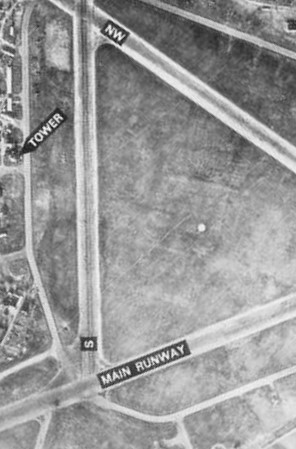
Mount Farm Mount Farm | American Air Museum in Britain
You can still see the location of the runways and perimiter track in this shot from Google Maps:
Here is image 255 rotated north/south to align with the Google map.
-
 1
1
-
-
I came across this book while surfing the Net. Anyone read it?
War Book Shop | Military & Australian History Publications
-
Has CASA issued a standard for an aviation approved personal flotation device, or can you just grab the ones out of your fishing tinny?
-
I was going to type 'machine', but I thought that was too restrictive. I wanted to include all objects which man makes to make the completion of a task easier. In that light, I think 'tool' is a wide enough description. It encompasses everything from a pointy stick to an industrial robot.
-
Jasuz! I thought someone had snuck in a porn video.
-
1
-
2
-
3
-
-
When investigating the cause of any sort of fatal incident three things must be considered:
1. The human who was involved the incident.
2. The environment where the incident happened
3. The condition and behaviour of any tool involved in the incident.
By environment, I mean everything which could effect a person's behaviour where the incident occurred
By tool, I mean any man made object.
If anything raises a red flag to a Coroner during an Inquest, he can make a recommendation that something is done to reduce the future impact of the flagged matter. Whether or not the recommendation can be carried out is not the point of an Inquest. Many Coroner's recommendations have failed to be implemented because after examination, implementing them was not practicable. There's no harm in making a suggestion.
In the case of the intoxicated rider, he was an accident waiting to happen. If not in the road works, then somewhere else before he got to his destination. That the set-up of the road diversion was not up to standard might not have been a factor in the collision, but at least the bodies who set up the diversion have been given a kick up the **** and hopefully have improved their performance. The Coroner definitely considered the set up an environmental factor.
-
I wonder if that disorientation due to the change from IFR to VFR when breaking out of muck could be a contributor to some "flight into terrain" crashes.
-
Well, now you know how our system works. I'm sorry that I can't find a copy of the Death Certificate of one of my ancestors right now, but the Death Certificate contains a heck of a lot of information regarding the identity of the deceased; their occupation; marital status; where and when born, and to whom; marriages and issue, as well as cause of death. Apart from cause of death, the information relating to the other things is required to settle the deceased's Estate. For those of us researching our ancestry, it is also a fountain of useful information.I understand Turbo & you know far more about your own countries rules & regulations than I do. In fact, I know little to nothing about how your system works. But delving into a person's personal life history, which had no bearing on the case, was simply uncalled for...by a Coroner no less.As flyers, we are only concerned with identifying the causes of the crash, so we would ignore the other stuff. If, in the future, one wanted to research the causes, then the filed copy of all material presented in the Inquest could be obtained. Based on the information supplied by experts during an Inquest, a Coroner can make recommendations aimed at preventing, or minimising the causes, or factors contributing to a death.
-
2
-
1
-
-
I always thought that the "blind flying" section of a student flight training was meant to put the frighteners into the student so they were too scared to fly into a shadow when they got their VFR licence. As always, there will always be the 'bold' young pilot who will claim that two hour's under the hood on a clear day is all that is needed to handle a quick shot through a storm front, or conducting a flight along a familiar VFR route when the cloud base is 100 feet below lowest safe height, and there's a gorilla in the mist called Turbulence.
-
1
-
-
Sorry to insert a sidetrack here, but despite looking up Wikipedia and finding out that Caractacus Potts is a character in Chitty Chitty Bang Bang, I cannot find an explanation of the term "Caractacus Potts scenario."
Could someone sut this sidetrack off by providing an explanation, then we can get back to the topic?
-
 1
1
-
-
Small debris spread. Front of aircraft bent sideways. Propeller blades bent at tip.
Stall/spin???
-
1. Get an eye test to determine what needs correcting.
2. When you have your prescription, have your lenses made to fit this type of frame: CliC: The Original Magnetic Connection Eyewear Collective
The beauty of this type of frame is that they come with a permanent neck band, so they hand around your neck when you take them off. Also the magnetic join in he centre of the nose bridge makes it easy to put the glasses back on.
You could get one of these to help your typing:
-
1
-
-
I said, "A date for the Inquest cannot be set until a full Brief of Evidence has been completed. That means chasing up eyewitness statements, completion of technical examinations into the human,machine and environmental factors, and the submission of statements based on those examinations."
Unfortunately, in the Real World, deaths are not investigated; conclusions reached, and legal niceties completed in 45 minutes plus ads as happens in CSI USA.There's quite a bit of time and money tied up right there....Also, in most Coronial matters, the Crown is represented by a Police Prosecutor, the next-of-kin might engage their own solicitor, and any person likely to be charged with a criminal offence is wise to have a solicitor present. It is only in the rare big deals, like major bushfires and disasters involving multiple deaths that the bewigged ones would stick their noses into the trough.
-
1
-
1
-
-
A date for the Inquest cannot be set until a full Brief of Evidence has been completed. That means chasing up eyewitness statements, completion of technical examinations into the human,machine and environmental factors, and the submission of statements based on those examionations.
After the Brief has been completed, the Coroner has to find a time in the Court's diary to hear the Inquest. Don't forget that places in the Court diary for the future would have been filled with other Inquest dates well before the date of a particular death.
Apart from obvious reportable deaths, such as sudden deaths due to natural causes, or accident deaths obviously caused by the deceased (drugs, swimming related drownings), a vacancy might not be found in the diary for up to 12 months.
Coroners are usually pretty switched on people who will not put up with the delaying antics lawyers employ in the Civil and Criminal jurisdictions.
-
Who said that this Coroner's Inquest took weeks or months? I'd suggest that the Hearing was knocked over in a day. A defended assault matter only takes a few hours to deal with.
-
You clearly don't understand the role of the Coroner in the Judicial System.
A lot of what was printed in that report was pro forma for a Coroner's report. That was all the stuff about the identificaton, ancestry, time , place and date of death, cause of death. If you could get a copy of the deceased's Death Certificate, you would find that there things are included in the record. That also included details of children and his marital and employment status.
Another duty of the Coroner is to determine if the actions or inactions any person or persons caused the death, and to recommend that if another hand was involved in the death, should the matter be reviewed for criminal prosecution. Clearly that was the reason for the questions about the prior accident history of the aircraft, and why the previous owner was interrogated about his porkies.
It is clear that the Coroner came to the conclusion that the previous owner was a scared dickhead trying to cover his arse, but the he did not contribute to the death.
The Coroner seems to have come to a correct conclusion that the deceased was solely responsible for his own demise due to unfamiliarity with the performance of the aircraft. The performance he did not know about was the lift capacity of the wing and the torque effect of the engine being in the opposite direction to that which he was used to. Would the result have been any different if the manoeuvre had been initiated at 500 ft or higher. I'll leave that to someone experienced in spin recovery in trikes, but I doubt the answer would be 'No'.
-
3
-

This Heat!
in AUS/NZ General Discussion
Posted
Sealed, dark surfaces have a low rate of reflection (albedo) so they will absorb radiation and become more heated than surrounding grassed areas. However, since grassed area are more reflective, heat will be re-radiated from the ground to surfaces above them ie your fuselage surface.
As a guess, I'd say that for the protection of a fuselage, park on the dark. Keep off the grass and concrete.