


madhatter
-
Posts
19 -
Joined
-
Last visited
-
Days Won
1
Content Type
Profiles
Forums
Gallery
Downloads
Blogs
Events
Store
Aircraft
Resources
Tutorials
Articles
Classifieds
Movies
Books
Community Map
Quizzes
Videos Directory
Posts posted by madhatter
-
-
9 hours ago, skippydiesel said:
Certified parts are fine for certified aircraft.
I am one of those owner/maintainers who like to find automotive replacement parts (mainly hoses, occasionally other stuff) that meets or exceeds the OM aircraft part specifications, for a fraction of the OM cost.
It should be recognised that the standards required to meet certification (parts) labours under a huge weight of history, that does not always reflect changes in technology but you will pay dearly for it anyhow.
Being able to find & substitute such parts, is one of the benefits/plesures that comes with owning a home built aircraft.😈
I've been an A&P for 50 yrs, I A for 35yrs, and an aeronautical engineer. I can tell you that some of the components used in some light sport aircraft are are incredibly substandard and have failed at times. I don't like a lawnmower fuel filter for my Jabiru 230D and I don't like the filter "after" the fuel flow computer, it should be before it.
-
9 hours ago, BurnieM said:
One of the forums had Garmin reps on and people asked why the G3X Touch efis was not also a IFR navigator as it has an internal WAAS GPS and fast processor;
Did it have the same GPS and firmware as their IFR navigators - yes
Was the processor fast enough to handle approach/departures - yes
Was the hardware built to the same standards as their IFR navigators - yes
Was the hardware subjected to the same testing as their IFR navigators - yes
Had Garmin ever produced IFR software that would run on the G3X Touch - crickets
What would happen to the price if Garmin submitted the paperwork to the FAA to get it approved for IFR - the price would double
Garmin decided that their main market for the G3X Touch was VFR flyers so did not get it approved to keep the cost down.
Is this grossly excessive costly approval process part of all certified avionics ?
G3X also has certified version currently
-
-
It was designed for fuel to be used on Jabiru but l never got used to it. I'm used to certified.
-
45 minutes ago, skippydiesel said:
"......original vinyl hoses."
Vinyl?????😈
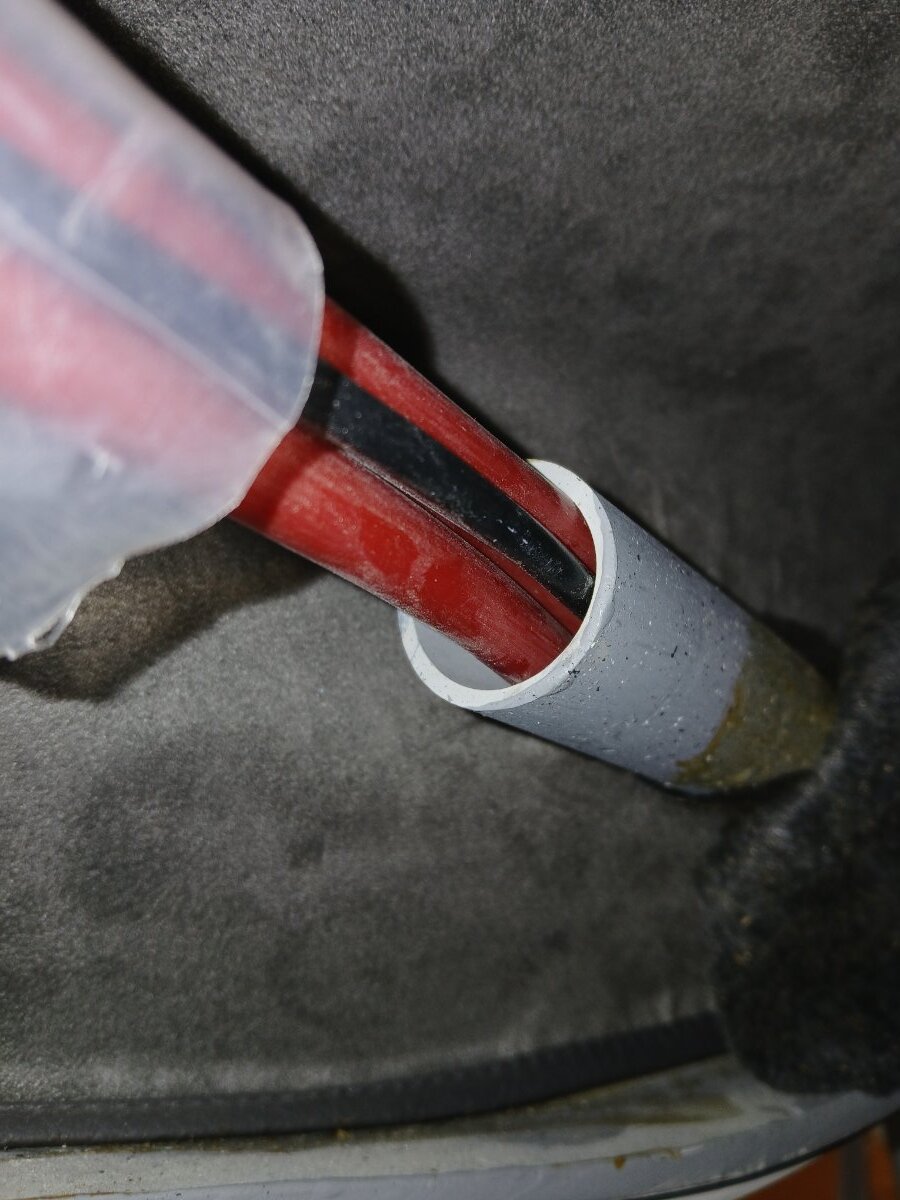
Yes. Factory original for my 230. Couldn't wait to get rid of them. Not firewall fwd of coarse but though the cabin.
-
Hoping to get performance up with the Rotec tbi fuel injection. About done now but a difficult project. Also installing conductive teflon fuel hoses to replace all hoses rather than original vinyl hoses.
-
 1
1
-
 1
1
-
-
57 minutes ago, Kirk J230 said:
I just purchased a 2009, Jabiru, J-230. I love the speed, the price, the baggage space, the weight... everything, except, I CAN'T LAND THE DAMNED THING! I have finally sorted out the torque to the left that almost put me in the FBO Break Room on my first takeoff, but landings are a complete mystery. On some occasions I do pretty good and think I've got the hang of it and the next time around I swear I do everything the same and I bounce twice and have to go around. On my last practice session of touch-N-go's I had to go around twice AFTER contact with the runway. I have now had to do a go-around 4 times in my flying career and 3 of them were in this plane. I'm 1850 hour pilot with a dozen or so planes under my belt all the way up the King Airs. Does anyone know the secret?
Kirk Rogers
Prescott, AZ
For what it's worth I trim 100% up on short final. The 230 nose will drop fast when power is reduced. It gives me a much better transition to flare. I used this technique in a Cessna 310 for the same reason. At least it works for me.
-
1
-
1
-
-
7 minutes ago, skippydiesel said:
Fair enough.
Dont know about the US however in Australia the builder can nominate any TO weight he/she feels is appropriate.
NOTE: Most builders will go with the factory recommended Max.
Speculation on the Jab 230D/J430 fitted with standard Jab 120 hp engine; I am not sure that your example serves your argument well. I would suggest the 4 seat variant, will have marginal TO performance, with 4 adult Pax on board. Then there are high density altitude days, that may make the marginal TO performance close to lethal 😈
The 1675 is the factory recommended weight. The J430 has been around for a long time.
-
1
-
-
Going ELSA voids the liability for Jabiru which I am willing to do. I guess the answer will come soon as the rule will be finalized next month.
I think the 230D is a great aircraft but at this time the LSA payload is one of the worst of all LSA aircraft. With two 175 lb people you can only have 14 gal fuel and nothing else.
-
1
-
-
The 230D has a design weight of 1675 lbs. but is limited to 1320 to meet LSA requirements. If a 230D is built as a kit the owner has the option for 1320 or 1675. The 230D was built as a 4 seater (J430) but restricted to 2 seats to fit LSA.
-
1
-
 1
1
-
1
-
-
One of the reasons I bought the 230D is I was told by the distributor that when MOSAIC was completed it was his information that the gross weight would be allowed to increase. I hope this will be the case as my empty weight is 883 lbs. To be legal at this time my fuel load must be minimal. If Jabiru doesn’t do this , then I feel that Jabiru will not survive in the US. MOSAIC allows the manufacturer to make this decision for LSA and ELSA. If Jabiru does not do this then that tells me that Jabiru does not support their past sales and there will be no trust in future sales. Just requiring a new purchase for the weight increase will not do it. Also the added issue of the crankshaft problem does not help. I hope this is not the case. I have asked Jabiru au but received no response. Just my opinion.
-
3
-
-
On 10/07/2025 at 8:51 AM, Blueadventures said:
The Vixxen A32 is probably the better aircraft in the 600kg group compared to the Jab 230D in my opinion; you say you have flown 32's and the 22's; and also worth noting is the 230D empty weight is in the 270 Kg range and the A32 is 320kg so have around a 50kg plus for the crew, fuel and other cargo weight. (Vixxen A32 is 280kg available and 230D has 230kg available) The Jab 230D can carry in excess than a MTOW of 600kg and good for the new Class 'G' group.
Empty weight of 230D is more like 380 kg
-
I will purchase a new engine and install it myself. It could take up to 2 years to get my crankshaft changed as I have less than 50 hrs since new. A lot can change in 2 years and I need to get this done. I will sell the engine once it's done. I am disappointed in the fact that I just bought a new engine and now have this issue. Jabiru is a small company and this issue will be very expensive for them so I understand.
-
2
-
1
-
-
All I am looking for is to get the crankshaft installed correctly by competent individuals. I spent $28,000 on a new engine installed by the Jabiru distributor when the aircraft was purchased. There was a serious installation issue found after I received the aircraft which I corrected. I've been in this industry for a long time and people make mistakes, we all do. My only disappointment is that with the low total time they would not exchange the engine. Other than that I am ok.
-
2
-
-
My opinion on the Jabiru engine is that it is a very well designed engine. Most new engines require a lot of time to perfect them, no one is immune from it. Continental had many years of problems with the IO520, Lycoming took about 20 to 25 years to perfect the LTS 101 turbine, I was there in the beginning and saw many test cell failures, many were catastrophic, one on my watch. Rotax and Continental both had crankshaft issues recently.
Jabiru uses some existing automotive parts wth great success. I don't think they are going cheap, just smart.
-
1
-
1
-
1
-
-
They cover everything except transportation. I suppose since they are not as large as other primary engine companies they don't have the resources to exchange engines. However I would think it to be more economical to exchange low time new engines. It would be more economical if sending engines to those who could do their own installations.
-
1
-
1
-
-
Jabiru will install the crankshaft but this takes time. This is at the distributors shop. I would rather get an exchange engine and not have to deal with any possible rebuild issues later. I had a significant issue with the current engine when they installed it.
-
1
-
1
-
-
I recently purchased a gen 4 3300 however it now requires a new crankshaft. The engine only has 37 hours total time. I requested an exchange engine but was turned down so it will be torn down to correct the issue, very disappointed in Jabiru over this. I will incur a lot of expense and down time because of this, if this was Lycoming, Continental, or Rotax it would be exchanged. I can install it myself, I've been maintaining aircraft for 52 years. Even with this I am impressed with the 230D aircraft.
On another subject: I believe the new E-PROPS propeller being developed would be a game changer on a Jabiru. I was able to perform an analysis on Flight Design with an E-PROPS propeller which resulted in it being approved for all FD aircraft in the US. The performance increase is substantial for cruise speed, rate of climb, vibration, etc. The other important aspect is it has a very low moment of inertia which is less than half of that on the fiberglass prop for the 230D. This significantly reduces the gyroscopic forces on the crankshaft. The E-PROPS propeller and spinner only weighs about 5 lbs.
If Jabiru doesn’t approve the use of it within a reasonable time I will convert to experimental and document the analysis like I did with Flight Design.
-
1
-
 1
1
-
3
-
Jabiru comparison with others
in Jabiru
Posted
I've been an A&P for 50 yrs, I A for 35yrs, and an aeronautical engineer. I can tell you that some of the components used in some light sport aircraft are are incredibly substandard and have failed at times. I don't like a lawnmower fuel filter for my Jabiru 230D and I don't like the filter "after" the fuel flow computer, it should be before it. Let me clarify that I want want components that at least meet certified standards, not necessarily being legally certified. Vinyl fuel hose does not meet that condition to me.