Rapture
-
Posts
62 -
Joined
-
Last visited
-
Days Won
8
Content Type
Profiles
Forums
Gallery
Downloads
Blogs
Events
Store
Aircraft
Resources
Tutorials
Articles
Classifieds
Movies
Books
Community Map
Quizzes
Videos Directory
Everything posted by Rapture
-
Yes, the Bug is a single seater. A small but steady market is all that is needed to make it a viable proposition. Through my TurbAero business, I am very close to a lot of the kit manufacturers and have a very good idea about their delivery volumes and in some cases, the margins on their kits. The advice of the manufacturers that I have received will be extremely helpful in making the determination whether a kit/RTF Bug could be a viable business. Validation of the existing flying Bugs performance would be straightforward. We have both TAS and GPS readouts to confirm our numbers. The only record of a third-party validation of the performance of a Bug was back when it was first released in the 1990s. The prototype, fitted with a 90hp two stroke engine participated in the Sun100 air race at Sun 'n fun airshow. While the Bug did not finish the race because the engine grenaded, so officially, a speed was not recorded for the Bug, it was noted that before the engine failure, it was easily overtaking the Glasairs etc that finished with a recorded average speed north of 240mph / 209 knots, with the Bug pilot noting that he was indicating around 250mph at the time of the engine failure. That said, we are building up a new build Bug from carbon that will be much lighter than the existing Bugs. It will also be tweaked for the engine installation so performance should be better than the currently flying ones. We will focus on getting verified data from that new one. As for Robin Austin's Sonerai, Robin has done an amazing job in tidying that airframe and achieving the performance that he has achieved. However, the performance that you refer to and for which it has achieved world records for is not ktas, it is knots ground speed, i.e. with wind. Robin clearly states in his write up for the aircraft (refer Sonerai World Record Plane - Robin Austin) that he achieves an honest 170 knots cruise at maximum continuous cruise power with the stock 100hp Rotax 912ULS. That would intimate a full power maximum straight and level speed in the region of 175-180 knots. Our stock Rotax 912ULS powered Bug exceeds that, but we are not comparing apples to apples because the Bug is a single seater. That is not a fair comparison. Again, I reiterate that Robin has done an amazing job on a 2 seater. The climb performance of Robin's Sonerai is also exceptionally good for a Rotax powered aircraft, also testament to his attention to drag reduction. FYI, the following text has been cut and pasted from Robin's website about his aircraft. He gives a summary of the cruise performance capabilities of his aircraft: As the speed envelope expanded, the need for an In Flight Adjustable (IFA) variable pitch propellor increased. Problem was, there are none available that suit Rotax’s low propellor RPMs and SGS's speed range. Fortunately, I became involved in the development of a brand new, IFA propeller with a leading propeller manufacturer Bolly Props Australia and was afforded a clean slate re blade design. After a year of solid engineering, development and static and dynamic testing, the prototype propeller flew. The utility of SGS was further transformed and with the new propellor and other airframe improvements it now climbed at 1920 ft per min with a maximum cruise speed of 170 knots. This speed is not particularly economical however, nor used frequently for regular cruising. Cruising speeds of 160 to 165 knots are more practical, economical and without any turbulence constraints once above 8000’. 160 knots cruise is achievable up to FL140 and provides added flexibility to stay above most weather (& yes, SGS has mixture control and oxygen). At 160 knots, engine RPM can be as low as 4600 and fuel consumption is typically 16 litres/hr depending on altitude. Cruise speeds reduce with increased loading, however even when carrying a passenger and baggage, 160 knot cruise is still practical between SL and 10,000'. That text gives some context to the true cruise capabilities of his aircraft.
-
Currently 196ktas with the Jab3300 and ground adjustable 2 bladed Bolly Optima Series 5 with 64” (I think but not certain without checking with the owner) diameter. Pitched for speed, static rpm is abysmal and climb rpm is not much better at 120 knots and is around 2400rpm so the Jab is way down on power in the climb, but it still climbs at circa 1500fpm. We are looking for a suitable IFA prop for it at the moment to maximise performance across the entire flight envelope. Those numbers are with Pilot and about 1/3 to 1/2 fuel. The owners Dad owns a respectable performing Lancair 360 and at the moment, both top out at about the same speed. The 360 has a constant speed prop. From 120 knots, the Bug accelerates much better than the Lancair, even with the fixed pitch prop and reduced power available at the start of the acceleration.
-
Thats why the Rotax 912ULS and Jab3300 and the likes will be popular. 160-180 knot cruise at under 20 litres per hour. Can’t get a much more efficient airframe than that! I anticipate that the more expensive 150+hp engine options will be popular amongst the elements within the experimental community who will be seeking outright speed.
-
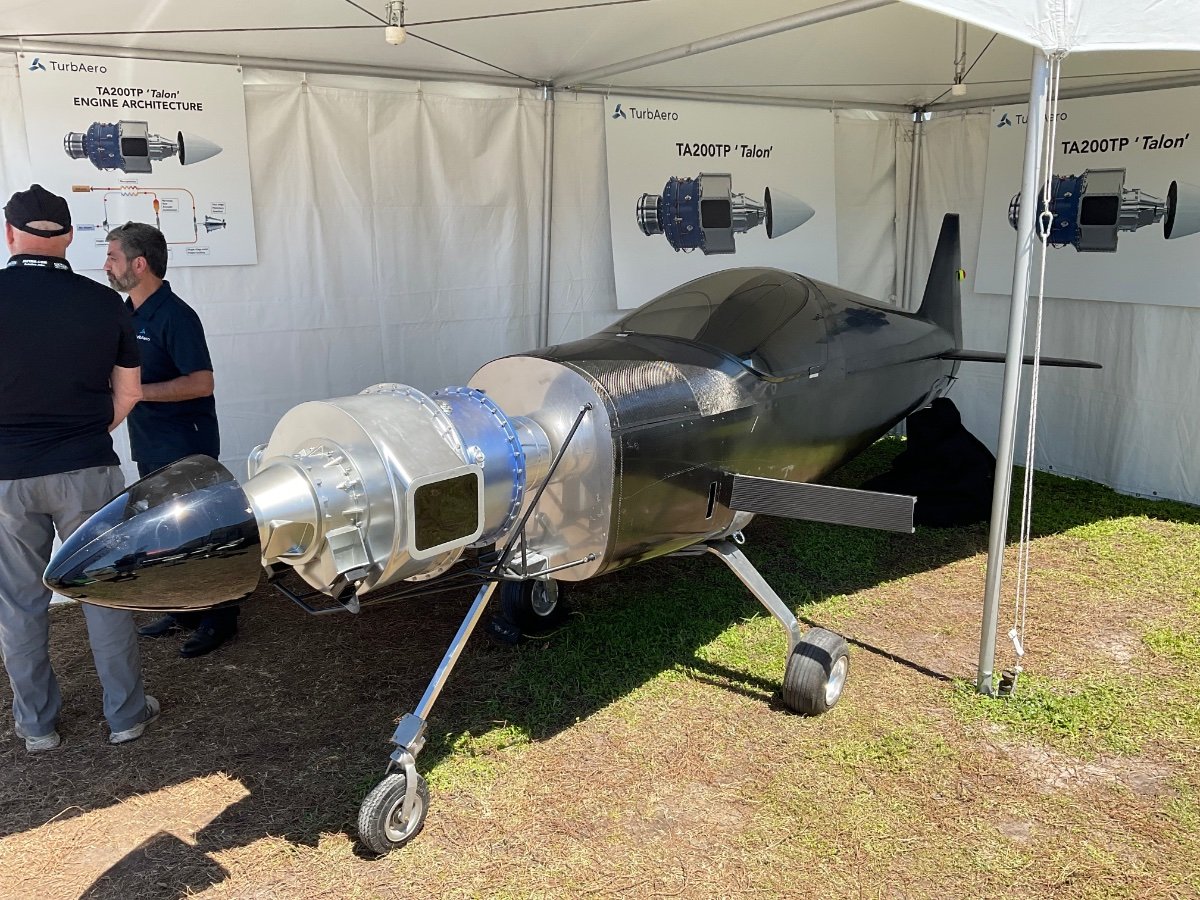
It is! To say that this has been a slow burn project is an understatement! I have spent the last 7 years developing a powerplant solution for the airframe (TurbAero turboprop) which I am still extremely busy with. The Bug development has taken a back seat to my full time job with TurbAero. I am now, with the help of my partner in the Bug venture pushing ahead with the Bug program through our Rapture Aircraft entity. The Bug is primarily an experimental aircraft. The 40 wing precludes it from the LSA category. The 66 wing is being considered for a very specific and one-off application for the Bug. However, one of the upsides of the big wing is that it potentially lowers the stall speed into LSA limits when flapped. So, that opens up the potential for an LSA variant, to complement the experimental variant. The 66 wing Bug does not need to be an LSA, nor should it be an LSA, but it could be an LSA. If it meets the LSA criteria and there is an adequate market to justify offering it as a RTF option, I would have anticipated that there would be support to make it available as an LSA option. The Va of 145 is for the 40 wing Bug, I.e. the experimental variant, not the potential 66 wing LSA variant. The redesign of the Bug is enhancing the ultimate g for the airframe. This will reflect in the new Va that will need to be established for an LSA variant. The takeoff roll of the Jab3300 Bug is only about 400m so not a lot different to a Jabiru LSA. Landing is closer to 5-600m though. Concerns about speed-related safety issues have been raised as a reason for not offering it as an LSA. Learning to operate an aircraft in a higher speed envelope is alway challenging, where speed management is important. However, in the low speed regime, this aircraft would meet the LSA stall speed criteria and as such, would be the same as any LSA out there who just meet the LSA stall speed requirements. If the stall is benign with good stall warning, then the risk in this flight regime is reduced. Perhaps an angle of attack warning system could be feature of a RTF Bug to provide further comfort and awareness in this area. Attached is a photo of the new all-carbon Bug fuselage that we are building up into the new build Bug. Disregard the FWF stuff. That’s not the real nosegear, simply something added to get it onto some gear to display at Oshkosh. The new engine mount will incorporate the retractable nosegear mechanism. A new main gear will also be installed. The fuselage is sitting on a cradle that you cannot see in this photo.

-
I can’t say at this stage but we already have the powerplant. We just need to get the airframe here to integrate it. Once that project advances a bit, I’ll write it up here with details.
-
Thanks Bosi. I’ve been on this forum for a long time but under other usernames that have been appropriate to the topics that I have posted. The Bug was designed and released in kit form in 1991 well before the Giles. The Bug is not an aerobatic aircraft but it is capable of aeros. I am not aware of any spin testing that was conducted on the aircraft, but I do know that it went through a rigorous test flight regime. Unfortunately, with all the data I have on the original design, I do not have the results of the flight test schedule. When we complete the build of the new build Bug, we will look into conducting all the necessary sequences. Although the rudder looks small, it is extremely effective and it is easy to over control with the rudder, according to the pilots that fly the aircraft.
-
The aircraft has good g limits, resulting in a useful Va which from the data I have is 145 knots. I’m guessing that the low number is as a result of the negative g limit. Bear in mind that at MTOW, the wing loading is 25 lbs per sq.ft. which is high. The aircraft tolerates turbulence pretty well, thanks to the high wing loading. Still, most folks won’t want to be bumped around so a more comfortable lower speed in turbulence would help with the comfort factor, as well as being below turbulence penetration speed. What speed folks are comfortable flying around at is a very personal thing. For those that have flown military or jets, 200 knots can be agonisingly slow. I’m one of those, as are my buddies in the Rapture team.
-
Here’s a bit of a teaser. We currently have one of our flyable nosegear retractable Bugs being prepared in the US to be shipped later this month back to Adelaide. It is going to be used to assess performance with a 200+hp engine fitted. With a Vne of 220ktas on this airframe, we won’t be testing top speed but we will certainly be able to extrapolate performance out to estimate a top speed. We will also be able to determine takeoff and climb performance with the powerplant. Both are likely to be fairly impressive given that the Jab Bug at 120 kias gives a 1700fpm climb at quite reduced rpm due to the current fixed pitch prop limitations. We will have a true 200+hp available in all phases of flight for our test unit. Once we have the new build Bug available, we will transplant the powerplant into the new build where we will be able to test top speed properly. Fun times ahead. I wonder what CASA/RAAus would think of a 250 knot RAAus registered aircraft…. Anyway, more on this project in due course. The airframe is scheduled for delivery in late March then we have to fit the engine. It’ll be quiet until then on that project.
-
As another data point, our Jabiru3300 powered Bug has an empty weight of 601 lbs, only 4 lbs more than the Rotax 912 Bug. Clearly, the Jabiru Bug is built lighter than the Rotax one. The new build carbon one will be lighter still by an estimated 30 lbs in basic structure. We will save more weight in the lighter panel. FYI, the nosegear retracts on the Rotax Bug to achieve its 186 ktas top speed while the Jab Bug has a fixed nosegear (more drag) and the Jab Bug also has a rough primer finish. With a smooth paint job, it will pick up another probably 15 lbs of empty weight but will have less skin friction. We anticipate that the Jab Bug will hit 200 ktas top speed with the paint job. The Jab Bug currently cruises at an economical cruise fuel flow of 20 litres per hour at a leisurely 180ktas. Compare that to the J230 that I fly occasionally where the 20 litre per hour fuel burn yields about 110-115 ktas. That indicates that the aerodynamic efficiency of the Bug is pretty good. Of course, it is a single seater but even still, its performance is impressive.
-
597 lbs empty weight. 24usg fuel capacity so maximum 145 lbs fuel means 742 lbs with full fuel and no pilot. This is a heavy build airframe with 3 coats of paint and heavy steam instruments. With the new carbon airframe and EFIS, we anticipate a lot lighter empty weight for the same engine. We have set a MTOW for the current flying 912 powered airframe at 1,000 lbs. so a 258 lbs pilot and bags allowance. With the new build, we will allow a MTOW of either 1,000 lbs or 1,100 lbs (TBD) with the 40 wing and 1,200 for the 66 wing.
-
Thanks RGMWA and FH, we are already targeting experimental as our primary market, but as well as LSA, MOSAIC is likely to be introduced to the US in the not too distant future that will facilitate factory build assist or full factory build. The RTF variant could also fit into that framework in the US, opening up the market there to more completed aircraft than the experimental category now offers. An LSA variant for the Australian market would be complementary to a US MOSAIC offering. Flutter is not an issue for this aircraft. It has had a full flutter analysis completed and the flying ones are regularly flown to 220 knots and in some cases, faster for test purposes.
-
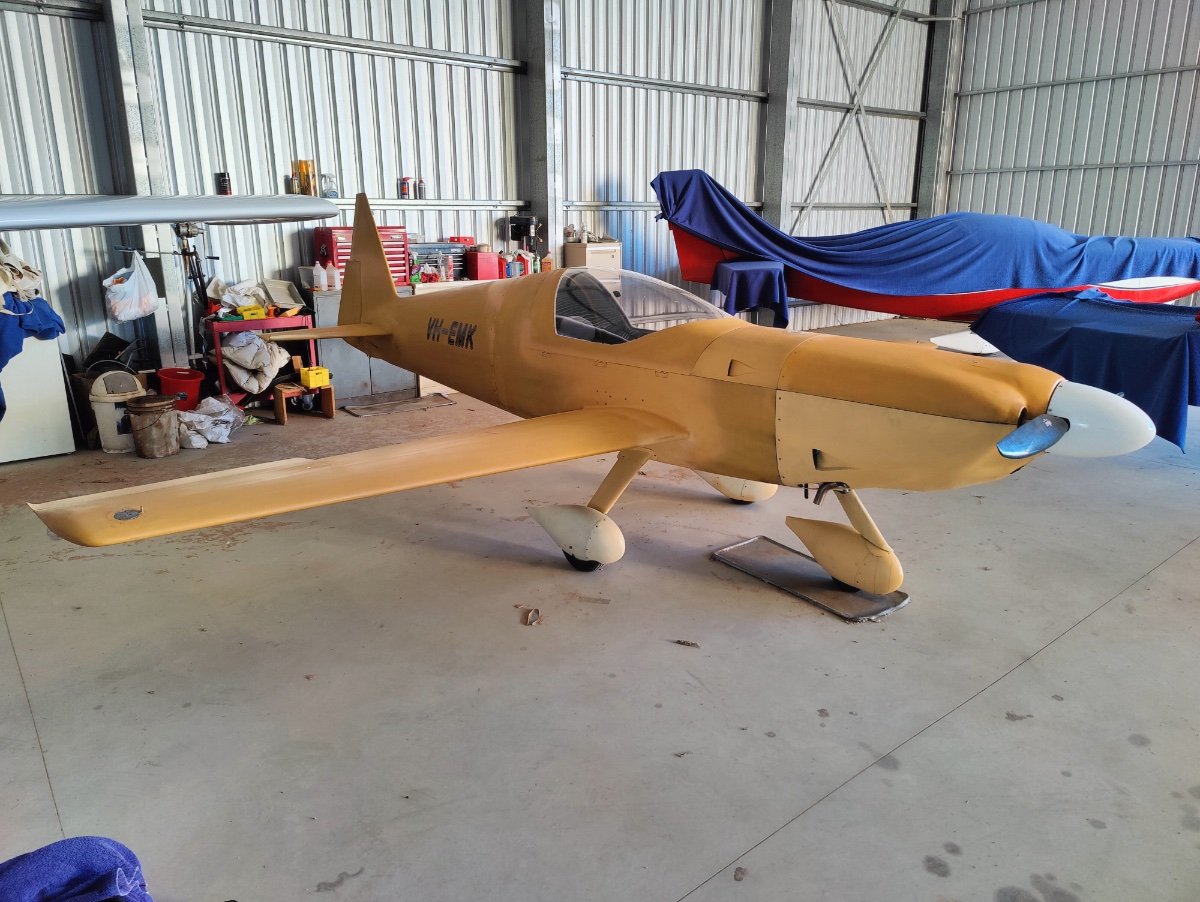
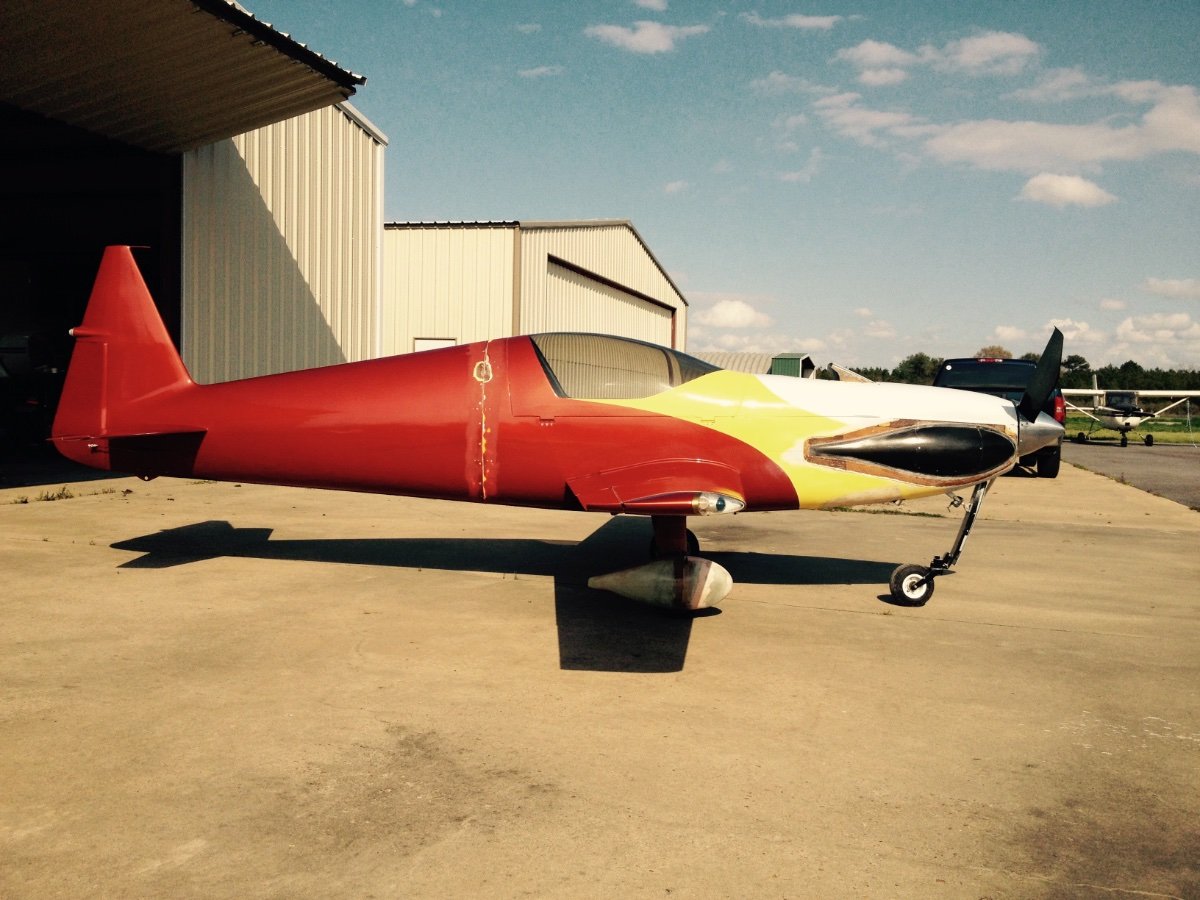
Hi everyone. I know we have some very passionate aviators on this site and I’d like to gauge the potential interest in a high performance single seat ready to fly or kit LSA. The beauty of the Australian LSA regulations is that we have removed the top speed limitation, while maintaining the balance of the international LSA frameworks. Our team within Rapture Aircraft have a couple of airframes flying. We have one in Adelaide powered by a Jabiru 3300. This aircraft is currently topping out at close to 200 knots. We had one flying in the US with a Rotax 912ULS that topped out at about 186 knots, but the prop was not optimised. Photos of both aircraft are attached. This aircraft currently has a wing area of 40 sq.ft. and stalls at around 55 knots with landing flaps. As part of a project with the aircraft that we are working on, we are scaling the wing to provide an area of 66 sq.ft. One of the repercussions of doing this is that the new wing could potentially offer a stall speed that meets LSA criteria. This configuration would still offer bugger all drag at cruise speeds. We know that a Rotax 912 fits under the cowl ok, but we are thinking that a 155hp Edge Performance 912sTi would be a nice powerplant that with its turbocharging would offer excellent performance at both sea level and at altitude. A 200 knots cruise should certainly be attainable with this powerplant. The current airframes are Vne limited to 220 knots (designed for and flown to higher speeds by the original designer, but a conservative number was subsequently placed on the Vne). However, the design overhaul that is being carried out will offer a higher Vne. The ready to fly aircraft wouldn’t come cheap, particularly given the cost of the engine, but the question I have for forumites is whether in your opinion there would be legitimate interest for folks to buy a 200 knots ready to fly single seat LSA? Of course, the alternative to the high performance high cost variant is to offer a Rotax 912/Jabiru 3300 powered low cost variant that would only offer a 160-180 knot cruise. We will still plan to offer the original wing for the super high performance kit market, but with the big wing making the aircraft LSA eligible, we want to explore that market. I would appreciate your opinions or comments about the concept of a high speed single seat LSA. Dave